

If you’re planning a trip to Thailand — or even thinking about retiring in the Land of Smiles — there’s one thing that will instantly make your time here richer: learning some Thai.
Not fluently. Not perfectly. Just enough Thai words and phrases to surprise a street vendor or spark a smile from your Grab driver.
Whether you’re navigating a Bangkok market, riding a tuk-tuk in Chiang Mai, or ordering pad kra pao on a beach in Phuket, these are the basic Thai phrases that will help you connect with locals, avoid awkward moments, and genuinely enjoy the rhythm of daily life across Thailand.
Let’s dive into the phrases you need to know — and why they matter.
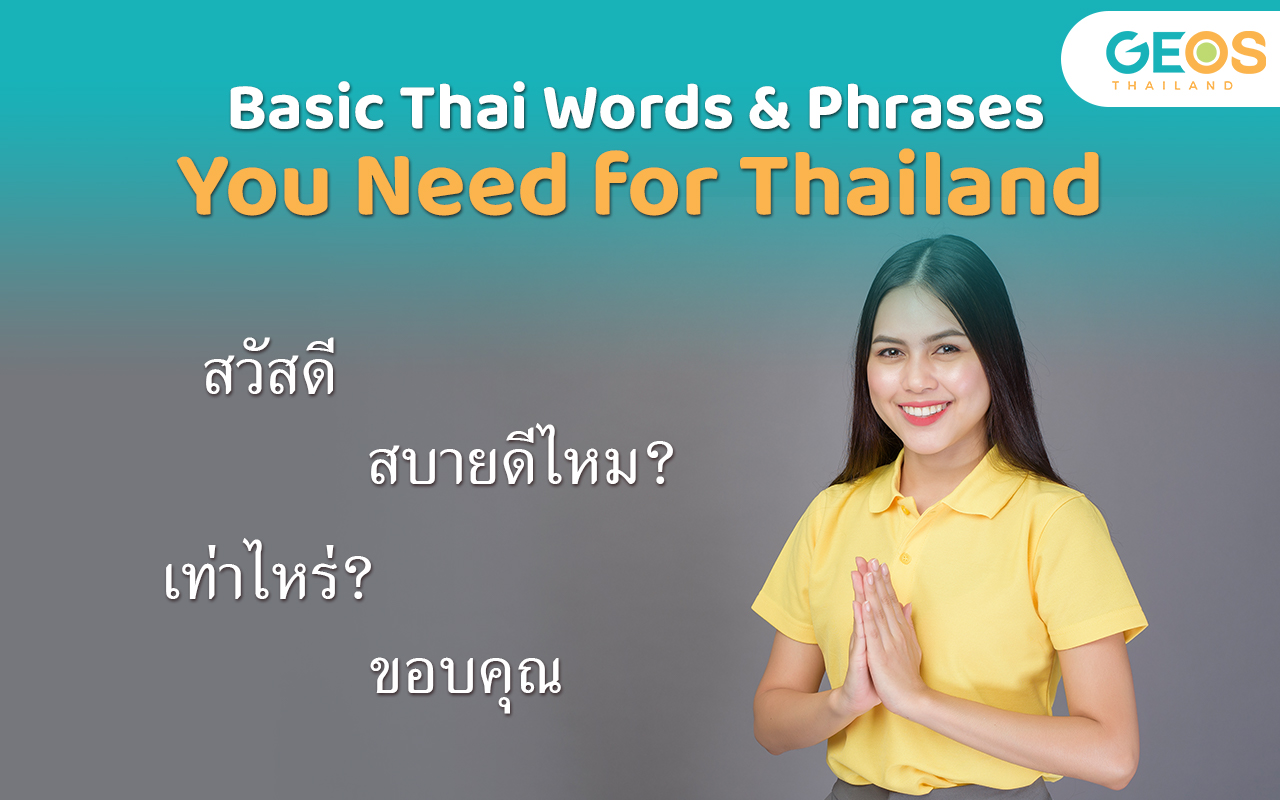
This is the first Thai phrase most people learn, and for good reason. It’s a greeting, a farewell, a polite introduction, and a cultural ritual all rolled into one.
Pair it with a wai (the traditional Thai gesture of palms together and a slight bow), and you’ll look instantly more respectful. It’s the kind of phrase you’ll use with taxi drivers, market sellers, teachers, and tuk-tuk drivers. One word, dozens of friendly encounters.
🟡 Useful Thai tip: Learn this one with the proper tone, and you’ll get nods of appreciation wherever you go.
This one’s essential. Whether you’re getting change at 7-Eleven, buying street food in Bangkok, or chatting with your host in a homestay in Chiang Rai, gratitude goes a long way.
Even a bit of Thai like this shows respect and friendliness — two key ingredients to traveling well in Thailand.
You’ll hear this everywhere, and once you start using it, you’ll understand just how deeply Thai this phrase is.
Spilled your drink? Mai pen rai.
The driver took the wrong turn? Mai pen rai.
The food was spicy, but not quite what you ordered. Mai pen rai.
It’s not just a phrase — it’s a mindset. And adopting it can help you enjoy your time here without sweating the small stuff.
Simple, right? But in a tonal language like Thai, even “yes” and “no” come with pronunciation traps.
Get these down early and you’ll unlock a whole level of everyday conversations — from confirming prices to answering waiters.
Eating Thai food without being able to complement it is a missed opportunity. Thai cuisine is bold, vibrant, and bursting with local flavors — and Thai people take great pride in sharing it.
Use this at food stalls, family restaurants, or when someone shares their homemade curry with you. You’ll earn big smiles in return.
Want to shop like a local in Bangkok or Phuket? Master this question.
You’ll need it in markets, food courts, and even with street vendors selling you ice-cold drinks on a hot day. Practice saying it clearly and confidently.
🟡 Local tip: Vendors often reply using Thai numbers. Learn 1–10 and you’ll be ahead of the curve.
You don’t need it until you really need it. This essential Thai phrase is something you’ll want to memorize before hopping on a longtail boat or exploring a rural temple.
Short version: Hong nam tee nai?
🟡 Bonus: Carry tissues — not all Thai bathrooms are fully stocked.
This is how you refer to yourself:
Use it when introducing yourself or answering questions. Thai speakers will immediately understand you’re trying, which opens the door to more natural language exchanges.
Thais don’t ask “How are you?” out of habit. They genuinely want to know.
This is the kind of phrase that helps you move from tourist to temporary neighbor.
You’ll hear this a lot when chatting with shopkeepers or waiters. You can also flip it around:
Whether you’re in Chiang Mai or a market in Phuket, it’s a polite way to ask before you launch into a question.
This isn’t just a question about food — it’s often used in Thai as a friendly, informal greeting.
Locals might say this instead of “How are you?” — especially in more casual settings. If you hear it, smile and reply:
Use this when you’re still learning Thai. Locals love it when you try.
This is a great phrase to break the ice, and might just lead to someone teaching you a few more words on the spot.
Want to ask someone to move aside politely in a busy night market? This is your go-to.
Also useful when:
It’s one of those common Thai phrases that shows good manners and awareness of Thai customs.
Add this to almost any request:
You’ll hear it used everywhere — in conversations, at restaurants, or when negotiating for discounts.
Perfect for politely saying no to persistent sales offers or freebies you don’t need.
Say it gently with a smile, and there are no hard feelings.
Let’s be honest — you won’t be fluent in Thai overnight. But knowing just a few basic Thai words and phrases makes a huge difference.
It helps you:
Many visitors come to Thailand for the food and scenery. But they stay for the people. Speaking just a little Thai shows you’re not just passing through — you’re trying to understand the local language and lifestyle.
Thailand is famous for its food and drinks, and these local phrases will serve you well:
 Want to order like a pro? Check out our blog post on popular Thai drinks for tips on what to try in Bangkok, Chiang Mai, and Phuket.
At GEOS Language Centre, we help travelers, retirees, and expats learn the Thai they’ll actually use — in markets, cafés, or daily life.
✅ Focus on spoken Thai
✅ Practice real conversations from day one
✅ Support with ED visa applications
✅ Central location in Bangkok
Whether you’re staying for a few weeks or planning your retirement in Thailand, GEOS makes learning Thai enjoyable, social, and useful.
Thailand is known as the Land of Smiles, and nothing earns those smiles faster than a visitor who makes an effort to speak Thai.
You do not need perfect grammar. You do not need every tone memorized.
Just learn some Thai phrases, use them with heart, and watch the world open up around you — one smile at a time.
Explore our collection of captivating articles, each offering a unique perspective
GEOS Thailand is conveniently located in the heart of Bangkok, close to Asoke BTS and Sukhumvit MRT stations.
enquiry@geosthai.com