
The best areas to live in Bangkok on an ED visa are within 3-5 BTS/MRT stops of your language school to avoid 2+ hour daily commutes. Popular areas to stay include Asoke/Sukhumvit (15-20k THB/month for studios), Phra Khanong/On Nut (8-12k THB/month), and Ratchada/Rama 9 (10-15k THB/month). According to Thailand Immigration Bureau regulations, landlords must file TM30 registration within 24 hours of a foreign tenant moving in. GEOS partnered with RE Property in February 2025 to help students find accommodation, handle lease agreements, and register TM30—removing the biggest bureaucratic hurdle for expats and digital nomads studying in Thailand. GEOS is located 10 minutes walk from BTS Asoke and MRT Sukhumvit, and most of our students choose apartments along the Sukhumvit BTS line where the cost of living balances convenience with affordability. After 20+ years helping students settle in Bangkok, we know location shapes your entire ED visa experience. Here’s how to find the best neighborhoods to stay in.

You will spend 600-900 hours commuting this year if you choose where to live in the city poorly.
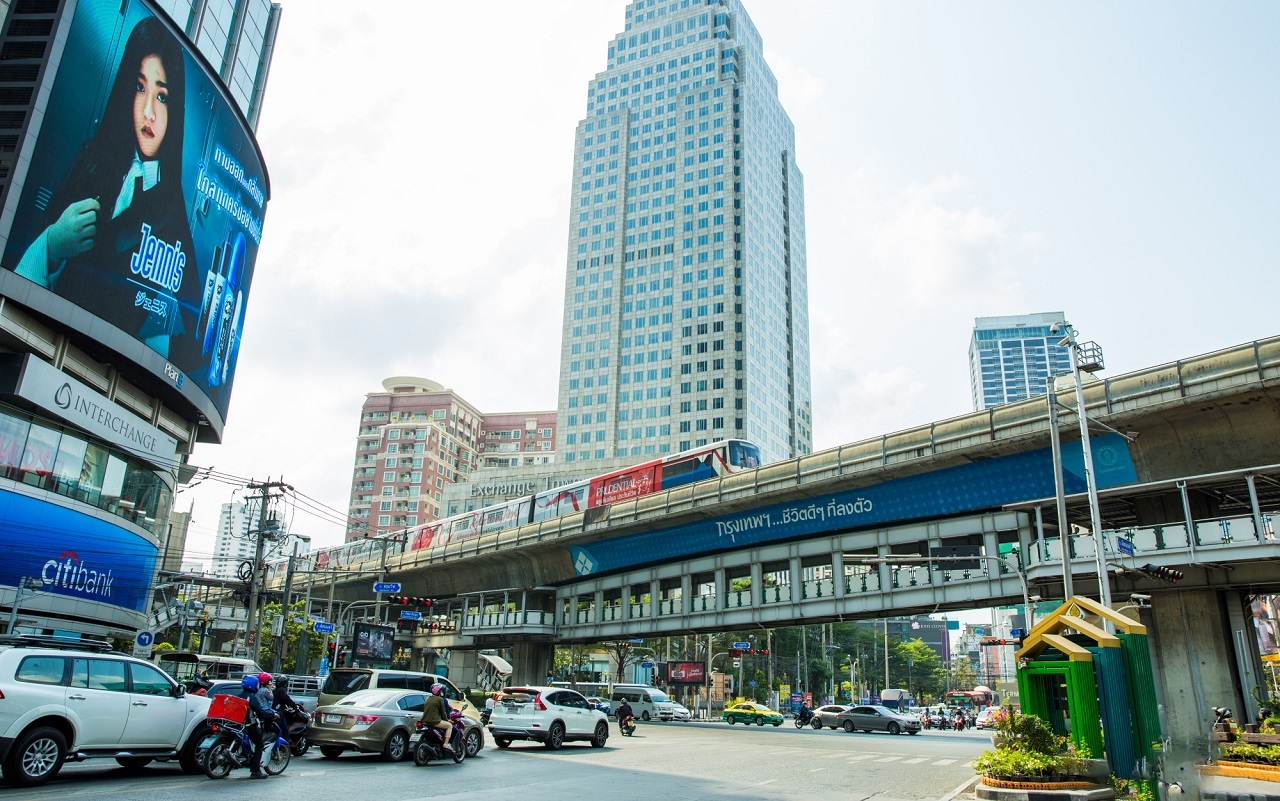
Bangkok traffic is not like traffic in other cities. A 5-kilometer journey can take 90 minutes during rush hour. The BTS Skytrain and MRT move you 20 kilometers in 30 minutes around the city. This difference shapes every day of your ED visa year and your overall living experience in Bangkok.
GEOS students who live near BTS/MRT stations report 15-20 minute commutes. Students who chose cheaper areas far from train lines spend 60-90 minutes each way. After three months, the time cost outweighs any rent savings.
The rule: Choose your school first, then choose accommodation within 3-5 BTS/MRT stops. Do not reverse this order.
Bangkok accommodation for ED visa students falls into three categories based on location, cost, and lifestyle. Each tier works for different priorities.
Best for: Students who want zero commute stress and maximum city access
Monthly rent: 15,000-20,000 THB (studio), 20,000-30,000 THB (1-bedroom)
Asoke sits at the intersection of BTS and MRT in downtown Bangkok. GEOS is located 10 minutes walk from BTS Asoke station, making this the zero-commute option for students. You can walk to Terminal 21, EmQuartier, and dozens of international restaurants. Language schools cluster in this area specifically because students value convenience over budget.
Students living in Asoke walk to GEOS in 5-15 minutes. No traffic. No crowded trains during morning rush hour. No wondering if the BTS breakdown will make you late. RE Property specializes in finding studio and 1-bedroom apartments in this expat neighborhood for GEOS students.
This is one of Bangkok’s best areas for students and expats because everything you need sits within walking distance. Getting around Bangkok from Asoke means you are already at the main BTS/MRT interchange.
What students tell us: “I pay more rent but save on taxis and grab cars. I walk everywhere.”
This tier makes sense if you work remotely while studying or if you value flexibility. The higher rent pays for location, not apartment quality. Over 12 months, you save 470-730 hours compared to students commuting from outer areas. For many students, Asoke represents a great place to live during their ED visa year.
Best for: Students who want city access without premium pricing
Monthly rent: 8,000-12,000 THB (studio), 12,000-18,000 THB (1-bedroom)
Phra Khanong and On Nut sit 10-15 minutes from Asoke by BTS. You get the same train line access at 40-50% lower rent. These neighborhoods offer local Thai markets, street food, and fewer tourists. These areas in Bangkok are popular among expats who want more authentic living without sacrificing BTS access. RE Property covers the entire Sukhumvit BTS line including these areas and can show GEOS students budget-friendly options.
The trade-off: You add 20-30 minutes daily to your commute compared to Tier 1. That is 140-210 hours yearly. Decide if the 5,000-7,000 THB monthly savings justify the time cost.
What students tell us: “I spend 30 minutes on the BTS daily but my apartment is twice the size for the same price as Asoke studios.”
This tier works well for students on tighter budgets who still want reliable city access. The BTS runs until midnight, so you maintain flexibility for evening activities. For students who want to find the best place to stay in Bangkok that balances cost and convenience, Phra Khanong and On Nut deliver excellent value.
Best for: Students who want authentic Bangkok life with good transport links
Monthly rent: 10,000-15,000 THB (studio), 15,000-22,000 THB (1-bedroom)
Ratchada and Rama 9 connect via MRT to Sukhumvit. These areas feel more Thai than Sukhumvit—fewer English signs, more local restaurants, authentic night markets. Students here experience Bangkok beyond the expat bubble. While many expats cluster in Sukhumvit, Ratchada offers a more authentic living environment. RE Property specializes in these MRT areas and can show GEOS students apartments in quiet residential areas that offer excellent value for space.
The commute requires one MRT transfer (Rama 9 to Sukhumvit). That adds complexity but keeps you within 20-30 minutes of GEOS. The rent-to-space ratio beats Sukhumvit significantly—you typically get 30-40% more space for the same price.
What students tell us: “I wanted to learn Thai language in a Thai environment. Ratchada pushes me to practice daily.”
This tier suits students who prioritize cultural immersion and do not mind slightly longer commutes. Many GEOS students choose Ratchada/Rama 9 specifically for the local experience while maintaining easy access to school via MRT. For students who want to truly experience Bangkok life rather than staying in tourist areas, these neighborhoods rank among the best places to live in Bangkok.
Area | Studio (Monthly) | 1-Bedroom (Monthly) | BTS/MRT to Asoke | Lifestyle |
Asoke/Sukhumvit | 15,000-20,000 THB | 20,000-30,000 THB | 0-5 minutes | International, convenient |
Phra Khanong/On Nut | 8,000-12,000 THB | 12,000-18,000 THB | 10-15 minutes | Mixed Thai/expat, affordable |
Ratchada/Rama 9 | 10,000-15,000 THB | 15,000-22,000 THB | 20-30 minutes | Local Thai, authentic |
Utilities: Add 1,500-2,500 THB monthly (electricity, water, internet). Air conditioning in Bangkok summers can push electricity to 2,000-3,000 THB if you run it constantly.
Deposits: Expect 1-2 months rent upfront plus 1 month deposit. Budget 30,000-60,000 THB for move-in costs depending on area.
According to Thailand Immigration Bureau regulations, landlords must report foreign tenants to Immigration within 24 hours of move-in. This report is called TM30 registration, and Immigration checks it during ED visa extensions and 90-day reports.
Many landlords forget to file TM30 or delay registration. When students arrive at Chaeng Watthana Immigration for visa extensions, officers verify that their registered address matches their actual residence. Missing or incorrect TM30 registration leads to fines (800-2,000 THB) and complications during the extension process.
Students at other Bangkok language schools handle TM30 registration alone. They must track down their landlord, confirm the filing, and hope it was done correctly. If something goes wrong, they discover it only when they are already at Immigration.
In February 2025, GEOS partnered with RE Property to handle accommodation support for our students. RE Property shows students available apartments, accompanies them to viewings, helps negotiate lease agreements, and registers TM30 with Immigration on behalf of the landlord.
This means GEOS students do not worry about whether their landlord filed TM30 correctly. RE Property handles the registration as part of the move-in process. Based on our 20+ years accompanying students to Chaeng Watthana Immigration, we have maintained a 100% visa approval rate for students who submit complete applications. The RE Property partnership removes the TM30 uncertainty that complicates visa extensions for students at other schools.
GEOS partnered with RE Property in February 2025 to provide comprehensive accommodation support for our students, making it easy for newcomers to find quality housing. RE Property specializes in student housing along the Sukhumvit BTS line and Ratchada/Rama 9 MRT areas—the neighborhoods where most GEOS students choose to live in Thailand.
Apartment listings: RE Property shows students available condos and apartments in areas within 3-5 BTS/MRT stops of GEOS. These listings match student budgets (8,000-20,000 THB monthly) and include both studio and 1-bedroom options. Bangkok offers diverse accommodation types, and RE Property helps students navigate these choices.
Accompanied viewings: RE Property staff accompany students to view apartments. They help students assess building quality, location convenience, and negotiate with landlords. Students do not navigate viewings alone or worry about language barriers.
Lease agreement support: RE Property reviews lease terms with students and ensures contracts follow Thai rental law. They explain deposit structures (typically 1-2 months rent plus 1 month deposit) and clarify utility payment expectations.
TM30 registration: RE Property handles TM30 filing with Immigration on behalf of landlords. This removes the biggest bureaucratic pain point for ED visa students. GEOS students do not chase landlords for TM30 confirmation or worry about missing registration during visa extensions.
Coverage areas: RE Property covers the entire Sukhumvit BTS line (from Bearing to Mo Chit) and specializes in Ratchada and Rama 9 MRT areas. These areas represent 90% of where GEOS students currently live.
Most Bangkok language schools recommend neighborhoods and send students to search alone. Some schools provide area guides. GEOS partners with RE Property to handle the entire accommodation process—from initial search to TM30 registration.
Based on our 20+ years operating in Bangkok, we know accommodation stress affects language learning. Students worried about finding apartments, negotiating leases, or filing TM30 spend less time focusing on their Thai or English studies. The RE Property partnership eliminates this stress.
Students at other language schools typically search for accommodation independently and hope their landlord files TM30 correctly. GEOS students have professional accommodation support and guaranteed TM30 registration from day one.
Prioritize convenience if:
Choose Tier 1: Asoke/Sukhumvit
Prioritize budget if:
Choose Tier 2: Phra Khanong/On Nut
Prioritize cultural immersion if:
Choose Tier 3: Ratchada/Rama 9
GEOS students do not need to search for apartments before arriving in Thailand. Once you enroll at GEOS, RE Property can help you move into an apartment within 48 hours of arriving in Bangkok. GEOS charges 3,000 THB for accommodation support, which includes a GEOS staff member accompanying you to your first viewing, access to current apartment listings, and RE Property’s full service (viewings, lease negotiation, and TM30 registration).
Timeline for GEOS students:
Before arrival: Enroll at GEOS and book temporary accommodation (hotel or hostel) for your first 3-5 days in Bangkok.
Day 1-2 in Bangkok: Contact GEOS to arrange your accommodation support. A GEOS staff member accompanies you to view apartments with RE Property in Asoke/Sukhumvit, Phra Khanong/On Nut, or Ratchada/Rama 9 based on your budget. RE Property shows you current listings and explains lease terms.
Day 2-3: Choose your apartment. RE Property handles lease negotiation and ensures you understand deposit requirements (typically 1-2 months rent plus 1 month deposit).
Day 3-4: Sign lease and move in. RE Property registers your TM30 with Immigration. You begin classes at GEOS in your permanent accommodation.
What students tell us: “I landed on Monday, GEOS staff took me to view apartments Tuesday, signed the lease Wednesday, and started classes Thursday. Worth every baht of the 3,000 THB fee.”
The 48-hour timeline works because Thai landlords want tenants immediately, and RE Property maintains current listings for GEOS students. You do not waste time searching from overseas or waiting for responses. Do not send deposits or sign leases before arriving in Bangkok—always view apartments in person.
Yes, but Immigration requires your landlord to file TM30 registration within 24 hours of move-in. Choose accommodation where landlords understand this requirement. Larger apartment buildings typically handle TM30 automatically, while private condo owners sometimes forget. Always confirm before signing your lease.
Budget 15,000-20,000 THB monthly beyond rent for food, transport, and utilities in the city of Bangkok. This includes 5,000-7,000 THB for food (mix of street food and restaurants), 2,000-3,000 THB for BTS/MRT passes, 1,500-2,500 THB for utilities, and 3,000-5,000 THB for entertainment and miscellaneous expenses. Your total cost of living depends partly on your living environment—students in Asoke spend more on dining and entertainment compared to students in Ratchada who cook at home more often. Students who cook at home spend less.
Bangkok traffic makes proximity essential. Students living within 3-5 BTS/MRT stops of their school report 15-25 minute commutes. Students living in outer areas without train access spend 60-90 minutes each way. Choose accommodation after choosing your school, not before.
Yes, but your new landlord must file a new TM30 registration within 24 hours. You must also update your address with Immigration during your next 90-day report or visa extension. GEOS students can contact RE Property if they need to relocate during their studies. RE Property will help find a new apartment and handle TM30 registration for the new address. Based on our 20+ years accompanying students to Chaeng Watthana Immigration, we ensure address changes do not complicate visa extensions.
Immigration may fine you 800-2,000 THB during visa extensions or 90-day reports if they discover missing TM30 registration. More importantly, missing TM30 can complicate your visa extension process. GEOS students using RE Property do not face this issue because RE Property handles TM30 registration during the lease process. Students finding accommodation independently should request written confirmation from landlords that TM30 was filed within 24 hours of move-in.
Calculate the time cost. Students in Tier 1 areas (Asoke/Sukhumvit) pay 5,000-8,000 THB more monthly but save 10-15 hours weekly in commute time. Over 12 months, that is 470-730 hours saved. Decide if your time is worth 10-15 THB per hour.
Yes. GEOS partnered with RE Property in February 2025 to provide accommodation support for students. RE Property shows you available apartments along the Sukhumvit BTS line and Ratchada/Rama 9 MRT areas, accompanies you to viewings, helps negotiate lease agreements, and handles TM30 registration with Immigration. This service removes the stress of searching for accommodation alone and ensures your TM30 is filed correctly from day one.
Book temporary accommodation (hostel or Airbnb) for your first week in Bangkok. Contact GEOS before arrival and we can connect you with RE Property to schedule apartment viewings for your first few days. RE Property covers the Sukhumvit BTS line and Ratchada/Rama 9 areas where most GEOS students live. For people visiting Bangkok for the first time, we recommend staying temporarily in Asoke or Sukhumvit to get oriented before committing to a 12-month lease. Never send deposits to landlords you have not met in person. RE Property helps you identify the best neighbourhoods to stay based on your budget and preferences.
Yes, but some landlords prefer tenants with longer visa types (work permits, retirement visas) for lease stability. Emphasize that your ED visa is valid for 12-15 months. Offer 2-3 months deposit if needed. Larger apartment buildings typically do not discriminate based on visa type.
Your accommodation choice affects every day of your ED visa experience. Choose poorly and you spend 600+ hours yearly in traffic. Choose well and you gain that time for language practice, cultural activities, and actually experiencing Bangkok.
GEOS is located 10 minutes walk from BTS Asoke and MRT Sukhumvit. Most of our students choose apartments within 3-5 BTS stops along the Sukhumvit line or in Ratchada/Rama 9 on the MRT. These neighborhoods keep students connected to both school and Bangkok city life without traffic stress. The best way to get oriented as a Bangkok expat is choosing accommodation that supports rather than complicates your daily routine.
Through our February 2025 partnership with RE Property, GEOS students receive comprehensive accommodation support. RE Property shows you available apartments, accompanies you to viewings, helps negotiate lease agreements, and handles TM30 registration with Immigration. This removes the biggest bureaucratic hurdle for ED visa students. When researching places to live in Bangkok, GEOS students benefit from professional guidance throughout the process.
Most Bangkok language schools explain the accommodation process and send students to search alone. Duke Language School and ALA Language Centre provide neighborhood recommendations but no actual support. GEOS partners with RE Property to handle everything from initial apartment search to TM30 filing—operational proof of our “we execute, not just explain” approach.
Based on our 20+ years operating in Bangkok, we have accompanied thousands of students through visa extensions and maintained a 100% approval rate for complete applications. We know that accommodation stress affects language learning. Students worried about finding apartments or filing TM30 spend less time focusing on their studies.
Ready to start your ED visa journey with full accommodation support? Contact GEOS for a free consultation. We can discuss your program options, budget, and connect you with RE Property to begin your apartment search before you even arrive in Bangkok.
Internal Links:
Official Sources Referenced:
Explore our collection of captivating articles, each offering a unique perspective
GEOS Thailand is conveniently located in the heart of Bangkok, close to Asoke BTS and Sukhumvit MRT stations.
enquiry@geosthai.com