
TM30 is Thailand’s address notification form that property owners must file within 24 hours when you move into any residence in Thailand. Without valid TM30 on file, Chaeng Watthana immigration will reject your ED visa application at your first appointment (no exceptions). Students need their passport, lease agreement, and landlord’s house registration book (tabien baan) to file, either in person at immigration or via the Section 38 app. At GEOS, we verify your TM30 status on day one when you start the ED visa application process because missing TM30 is one of the most common reasons applications get rejected at immigration. Our staff helps you file it correctly if your landlord refuses or doesn’t know how, and we confirm it’s registered in immigration’s system before scheduling your first appointment. We accompany you to Chaeng Watthana on the day to handle any issues that arise. This is why we’ve maintained a 100% visa approval rate for students who submit complete applications over 20+ years. We make sure TM30 is filed before you ever step foot at immigration. Here’s exactly what you need to know about TM30, based on what we handle daily at Chaeng Watthana.

TM30 is Thailand’s mandatory address notification system under the Immigration Act B.E. 2522 (1979). Property owners must report when a foreigner stays at their residence for more than 24 hours. This applies to hotels, condos, apartments, and private homes.
The form collects basic information: your name, passport number, nationality, current address, and move-in date. Your landlord submits this to immigration either online through the Section 38 app or in person at their local immigration office.
Immigration uses TM30 to track where foreigners are residing in Thailand. When you apply for a visa extension, change your visa type, or file your 90-day report, immigration checks their system to verify your registered address matches what you’ve listed on your application.
Why TM30 matters for ED visa students: Chaeng Watthana immigration requires valid TM30 on file before processing your initial ED visa application and every subsequent 90-day extension. If the system shows no TM30 record for your current address, they’ll reject your application on the spot.
At GEOS, we verify your TM30 status on day one of the ED visa application process. If your landlord hasn’t filed it, we help you file it yourself before we schedule your first immigration appointment. We’ve never had a student turned away for missing TM30 because we make sure it’s filed and verified before you walk through immigration’s doors.
Your landlord or property owner is legally required to file TM30, not you. But if your landlord refuses or doesn’t know how, you can file it yourself.
Who must file:
Landlord responsibilities: Thai law requires property owners to file TM30 within 24 hours of a foreigner moving in under Section 38 of the Immigration Act. The penalty for non-compliance is a fine between 800 and 2,000 baht.
What if my landlord won’t file? Many Bangkok landlords don’t know about TM30 requirements, especially if they’ve never rented to foreigners before. Some refuse because they don’t understand the process or they’re worried about tax implications (filing TM30 doesn’t affect their taxes).
When GEOS students face uncooperative landlords, our staff contacts the landlord to explain the requirement. About 80% cooperate once they understand it’s a simple immigration formality with no tax consequences. For the 20% who still refuse, we help students file TM30 themselves or we assist in finding immigration-compliant accommodation near our school.
Can I file it myself? Yes. You can file TM30 at Chaeng Watthana immigration or online via the Section 38 app using your landlord’s house registration book (tabien baan). We walk our students through this process if their landlord won’t do it.
You can file TM30 in person at immigration or online through the Section 38 app. At GEOS, we help students choose the filing method that works best for their situation.
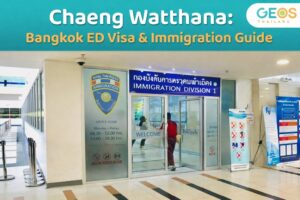
Location: Government Complex Commemorating His Majesty the King’s 80th Birthday Anniversary, Building B (Chaeng Watthana Road, Lak Si, Bangkok). The TM30 counter is on the ground floor near the main entrance.
Opening hours: Monday to Friday, 8:30 AM to 4:30 PM (closed weekends and public holidays)
Documents needed:
Process:
Total time: About 30 minutes if you arrive early with all required documents.
At GEOS, we accompany students to Chaeng Watthana for their first TM30 filing if their landlord won’t do it. We make sure you have all required documents before the visit and we verify the filing is registered in immigration’s system before scheduling your ED visa appointment.
The Section 38 app is Thailand’s official online TM30 filing system. When you have your landlord’s documents ready, the app can save you a trip to Chaeng Watthana.
Documents to upload:
Process:
Best practice: After filing online, visit Chaeng Watthana to request a printed TM30 receipt before your ED visa appointment. The printed receipt provides physical confirmation that your TM30 is on file.
At GEOS, we help students use whichever filing method works best for their situation. If you prefer online filing, we’ll walk you through the app. If you prefer in-person filing, we’ll accompany you to Chaeng Watthana. We verify your TM30 is registered in immigration’s system before scheduling your first appointment, regardless of which method you choose.
Assuming your landlord filed it: Many landlords don’t know about TM30 requirements. Don’t assume it’s handled. Ask your landlord directly if they’ve filed TM30. If they look confused, they probably haven’t done it.
At GEOS, we check TM30 status on day one of your application process. We don’t rely on assumptions. We verify it’s actually filed before moving forward with your visa application.
Waiting until the day before your appointment: If you discover TM30 isn’t filed the day before your immigration appointment, you’re cutting it extremely close. Give yourself at least 5 to 7 business days to handle TM30 filing before your first appointment.
We verify TM30 status well before scheduling your first appointment. This gives us time to file it properly if your landlord hasn’t done it.
Not getting a printed receipt: After filing TM30 (whether online or in person), request a printed receipt from Chaeng Watthana before your ED visa appointment. The printed receipt is physical proof that immigration officers can verify immediately.
We recommend all first-time ED visa applicants get a printed TM30 receipt from Chaeng Watthana before their appointment.
Using old TM30 from a previous address: If you’ve moved apartments since your last immigration visit, your old TM30 doesn’t count. Your new landlord must file a new TM30 within 24 hours of you moving in.
When GEOS students move, we send them a TM30 checklist and verify the new filing before their next 90-day report.
Not refiling after international travel: Thailand’s Immigration Act requires a new TM30 filing every time you enter the country, even if you’re returning to the same address. Your landlord must refile within 24 hours of your return.
We remind students returning from abroad to confirm their landlord has refiled TM30 before their next immigration appointment.
Filing without landlord’s tabien baan: You cannot file TM30 without your landlord’s house registration book (tabien baan). If your landlord won’t provide a copy, you’ll need to work with them to complete the filing or find alternative accommodation.
At GEOS, when students face this situation, our staff contacts the landlord to explain the requirement. If the landlord still won’t cooperate, we help students find immigration-compliant housing near our school.
Chaeng Watthana immigration checks TM30 status at every visa-related appointment, not just your initial ED visa application.
When TM30 is required:
What immigration checks: When you submit your visa extension application, the immigration officer enters your passport number into their system. If the system shows no TM30 record matching your current address, they’ll reject your application immediately.
If you’ve moved since your last appointment: Your new landlord must file a new TM30 within 24 hours of you moving in. Bring your new TM30 receipt to your visa extension appointment. Immigration will update their records with your new address.
If you’ve traveled internationally: Your landlord must refile TM30 within 24 hours of your return to Thailand, even if you’re returning to the same address. This is one of Thailand’s more confusing immigration requirements. The law states every entry into Thailand requires a new TM30 filing.
At GEOS, we remind students about TM30 requirements before every immigration appointment. If you’ve moved or traveled internationally, we verify your new TM30 filing before scheduling your 90-day extension. We don’t assume it’s been handled. We check immigration’s system to confirm.
What happens if TM30 isn’t filed at your extension appointment: Immigration will reject your application and tell you to come back after TM30 is filed. This means:
This is why we verify TM30 before every GEOS student’s appointment. We’ve never had a student’s extension rejected for missing TM30 because we make sure it’s filed before they walk into immigration.
TM30 is Thailand’s address notification system that tracks where foreigners are staying. Immigration uses it to verify your current residence when processing visa applications and extensions. Without it filed, they won’t process your application.
You won’t be fined, but immigration will reject your visa application until TM30 is filed. This can delay your visa by weeks if you’re close to your deadline. At GEOS, we verify TM30 on day one of your application process to prevent this.
We verify your TM30 status when you start the ED visa application process. If your landlord hasn’t filed it, our staff helps you file it yourself or accompanies you to Chaeng Watthana to file in person. We confirm it’s registered before scheduling your first immigration appointment.
About 30 minutes if you arrive early (before 9 AM). The TM30 counter is on the ground floor near the main entrance. Bring your passport, lease agreement, landlord’s tabien baan, and photocopies of all three documents.
You need your passport, current visa stamp, lease agreement, and your landlord’s house registration book (tabien baan). Bring photocopies of everything. Immigration will stamp the copies and return your originals immediately.
Both methods work. The Section 38 app is convenient if you have digital copies of your documents. In-person filing at Chaeng Watthana gives you a printed receipt immediately. At GEOS, we help students with either method and verify the filing is registered before scheduling your immigration appointment.
Yes. Every time you change addresses in Thailand, your new landlord must file TM30 within 24 hours. Immigration’s system tracks your current registered address. If your visa extension application shows one address but TM30 shows another, they’ll reject it.
Yes. Chaeng Watthana requires valid TM30 on file before processing any visa application or extension. This isn’t optional. At GEOS, we’ve maintained a 100% visa approval rate by verifying TM30 before every student’s appointment.
At GEOS Language Centre, we’ve maintained a 100% ED visa approval rate for students who submit complete applications over 20+ years. We don’t just explain the visa process. We verify every requirement before your first immigration appointment, help you file documents correctly, and accompany you to Chaeng Watthana to handle any issues that arise.
Our staff checks your TM30 status on day one of the application process. If your landlord hasn’t filed it, we help you file it yourself. We confirm it’s registered in immigration’s system before we schedule your appointment. This is why our students don’t get turned away for missing paperwork.
Ready to start your Thai language studies with full visa support? Contact GEOS today. We’ll walk you through the entire ED visa process, from TM30 filing to your first day of class.
Ready to start your Thai language studies with full visa support? Learn about our Thai, English, and Japanese language courses → or read our complete ED visa guide.
Explore our collection of captivating articles, each offering a unique perspective
GEOS Thailand is conveniently located in the heart of Bangkok, close to Asoke BTS and Sukhumvit MRT stations.
enquiry@geosthai.com