
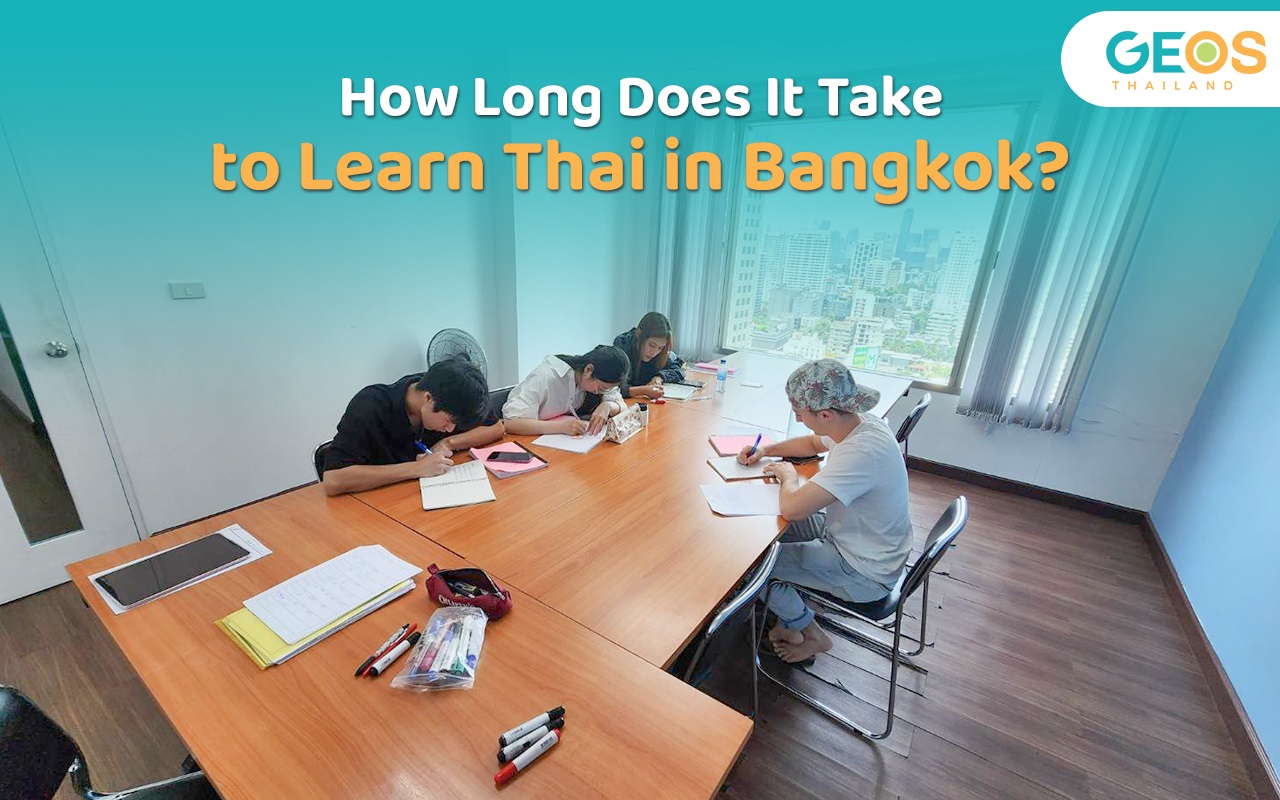
Basic Thai conversation takes around four months of focused study at 8 hours per week — enough to greet people, handle daily situations, and start reading the Thai alphabet. Confident fluency across speaking, reading, and writing takes 14 months. Thai is classified as one of the most challenging languages for English speakers due to its five tones, distinct script, and formal register system. At GEOS, our 20+ years of MOE recognition means the Thai program is structured and accredited — four modules from beginner foundations to upper-intermediate application, with all four skills taught in every lesson from day one. The timeline above assumes consistent attendance and active practice outside class, which most students in Bangkok find easier than expected, given that the city itself becomes your classroom. Here is an honest, level-by-level breakdown of what you can expect.
Most people researching Thai language courses ask the same question: how long until I can actually use it? The answer depends on how many hours per week you study and what you mean by ‘use it.’ Ordering food is not the same as reading a contract. This guide breaks down the realistic timeline at each stage, based on what GEOS students actually achieve.
Around four months of consistent study at 8 hours per week. By the end of Module 1 (Foundations), students can:
Speaking starts from the first lesson. GEOS uses a direct approach — Thai is spoken in class from day one, not introduced gradually after weeks of grammar study. Students who arrive with zero Thai typically surprise themselves within the first few weeks.
The four-month mark is roughly when living in Bangkok starts to feel different. You can navigate independently, read shop signs, and hold short exchanges without switching to English. That shift happens faster for students who practice outside class, which in Bangkok is unavoidable.
The Thai alphabet is introduced in Module 1 and developed progressively through each module. By the end of Module 2 (Building Fluency) at around the eight-month mark, students can:
Thai script is not as difficult as it first appears. The alphabet has 44 consonants and 32 vowels, but the patterns become logical quickly once students understand the tone rules. GEOS teaches script alongside conversation from Module 1, so students are reading and speaking simultaneously rather than treating them as separate skills.
By Module 3 (Intermediate) at the eight-month mark, students are reading short articles and writing simple paragraphs. This is the level at which Thai starts to feel genuinely functional — not just for survival, but for real communication.
Thai alphabet standards are set by the Royal Society of Thailand, the official authority on the Thai language.
By the end of Module 4 (Advanced Application) at 14 months, students are working at upper-intermediate level. In practical terms, that means:
Over the 14-month program, students study 8 hours per week during the beginner and intermediate stages, followed by 6 hours per week during the advanced stage. This is a significant investment of time — and the results reflect it. Most students at this level can communicate comfortably with Thai people in most everyday situations, though professional fluency and literary reading require continued study beyond the program.
The honest ceiling: 14 months will not make you a native-level speaker. Thai is genuinely difficult, and full professional fluency requires years of sustained exposure. What 14 months does give you is a strong, functional foundation — enough to live, work, and connect meaningfully in Thailand.
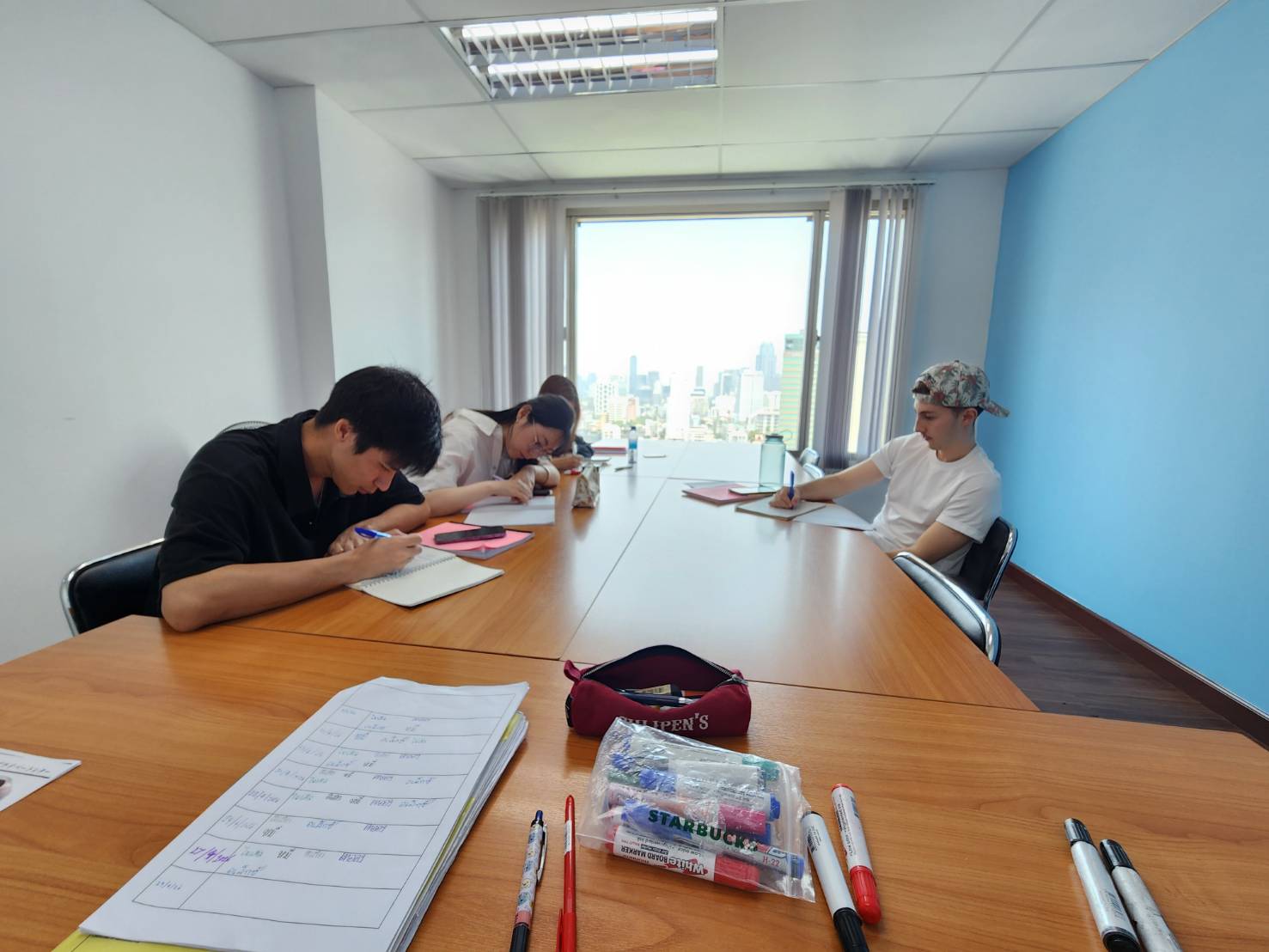
The GEOS Thai program is designed around two-hour study sessions. Beginner and intermediate students study 8 hours per week across four days, while advanced students study 6 hours per week across three days. This structure provides regular contact with Thai throughout the week while keeping each study session focused and manageable.
For ED visa students, classes are conducted in person and regular attendance is required throughout the course. GEOS tracks attendance and progress through each stage to ensure students are actively participating and progressing through the curriculum.
Students who supplement class hours with practice outside school — using Thai in daily life, watching Thai content, practicing with neighbors or market vendors — progress noticeably faster. Bangkok is one of the best environments in the world for language immersion because the language is everywhere.
Extension and visa requirements are managed through the Thai Immigration Bureau.
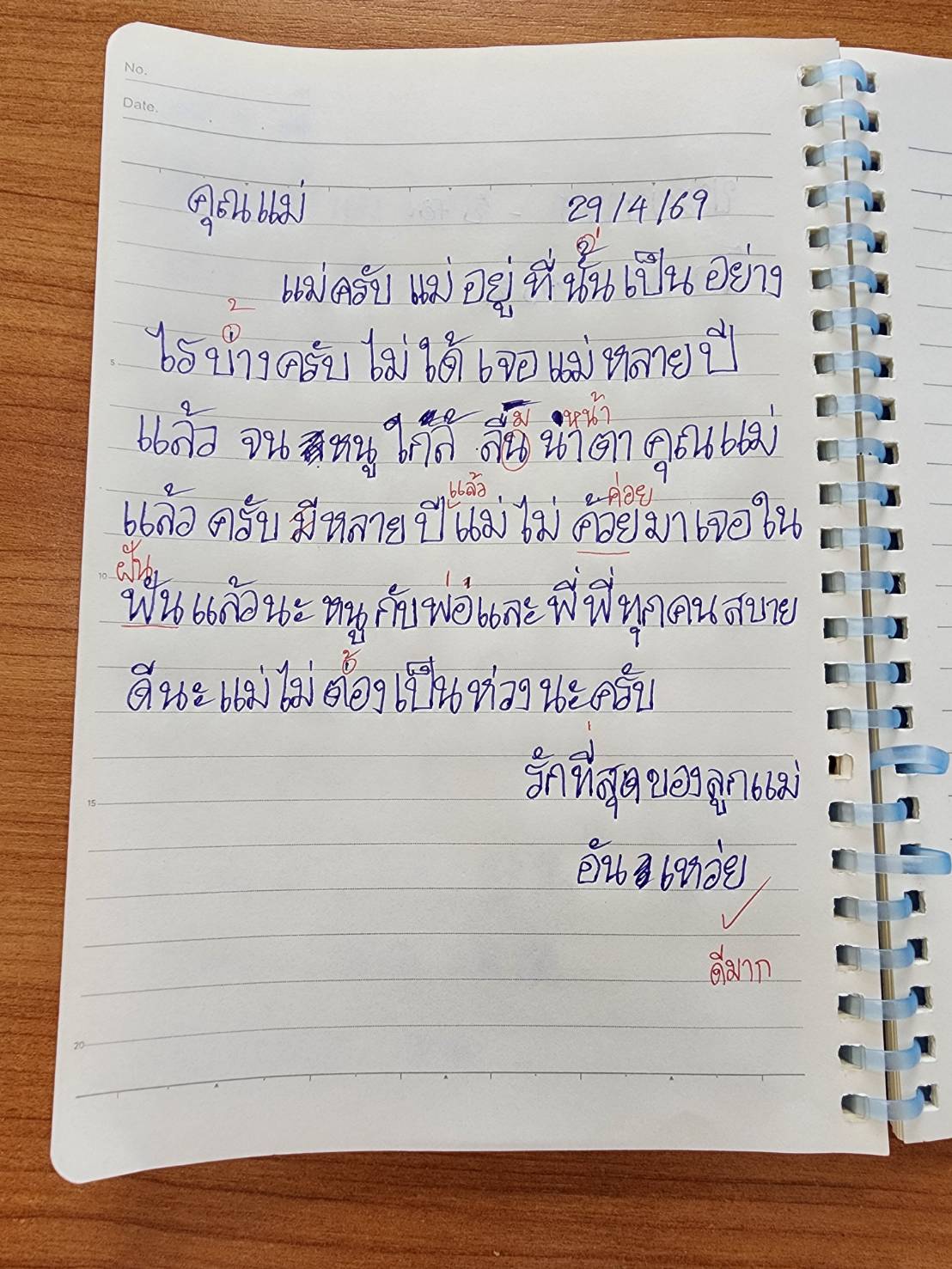
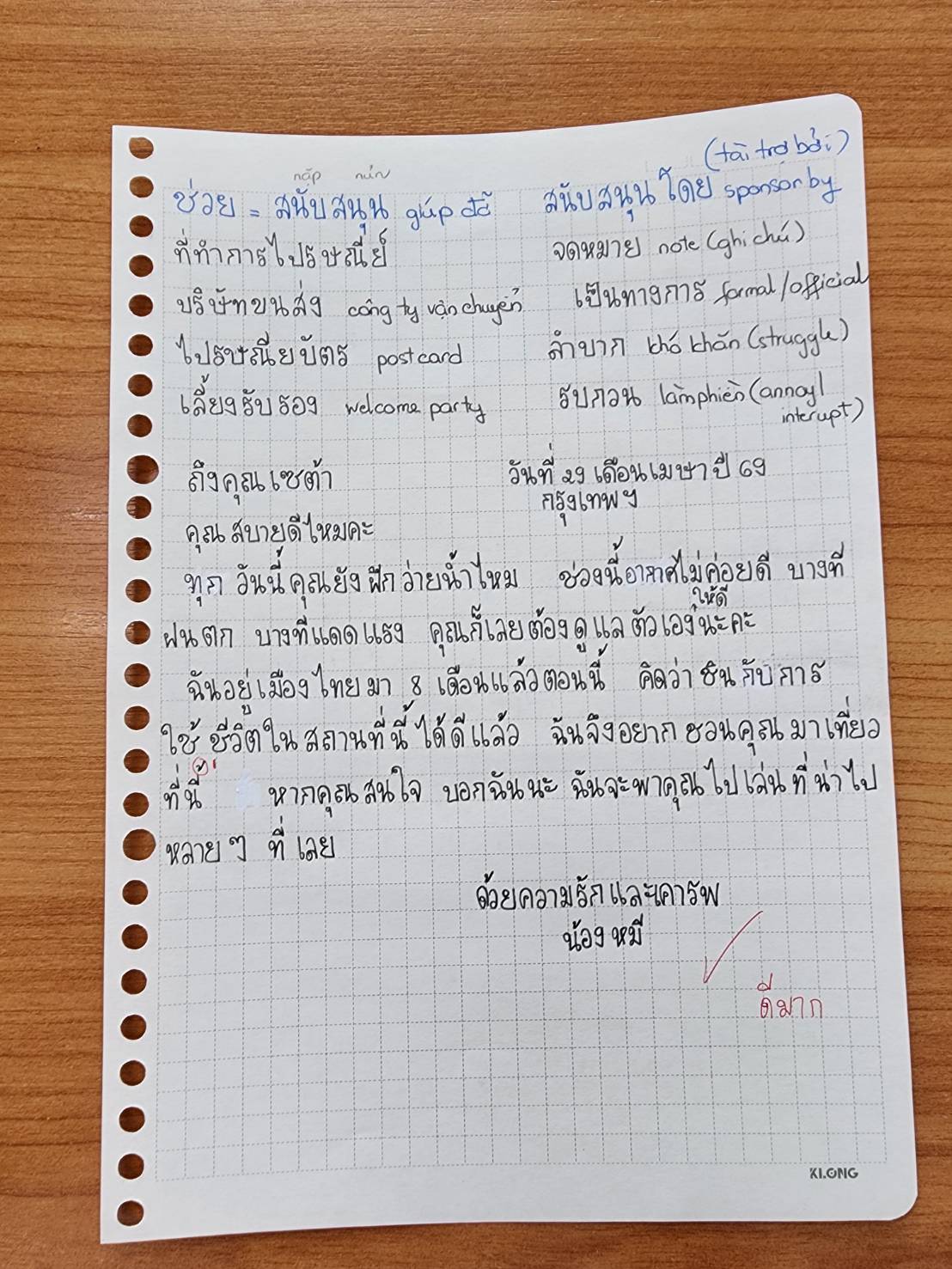
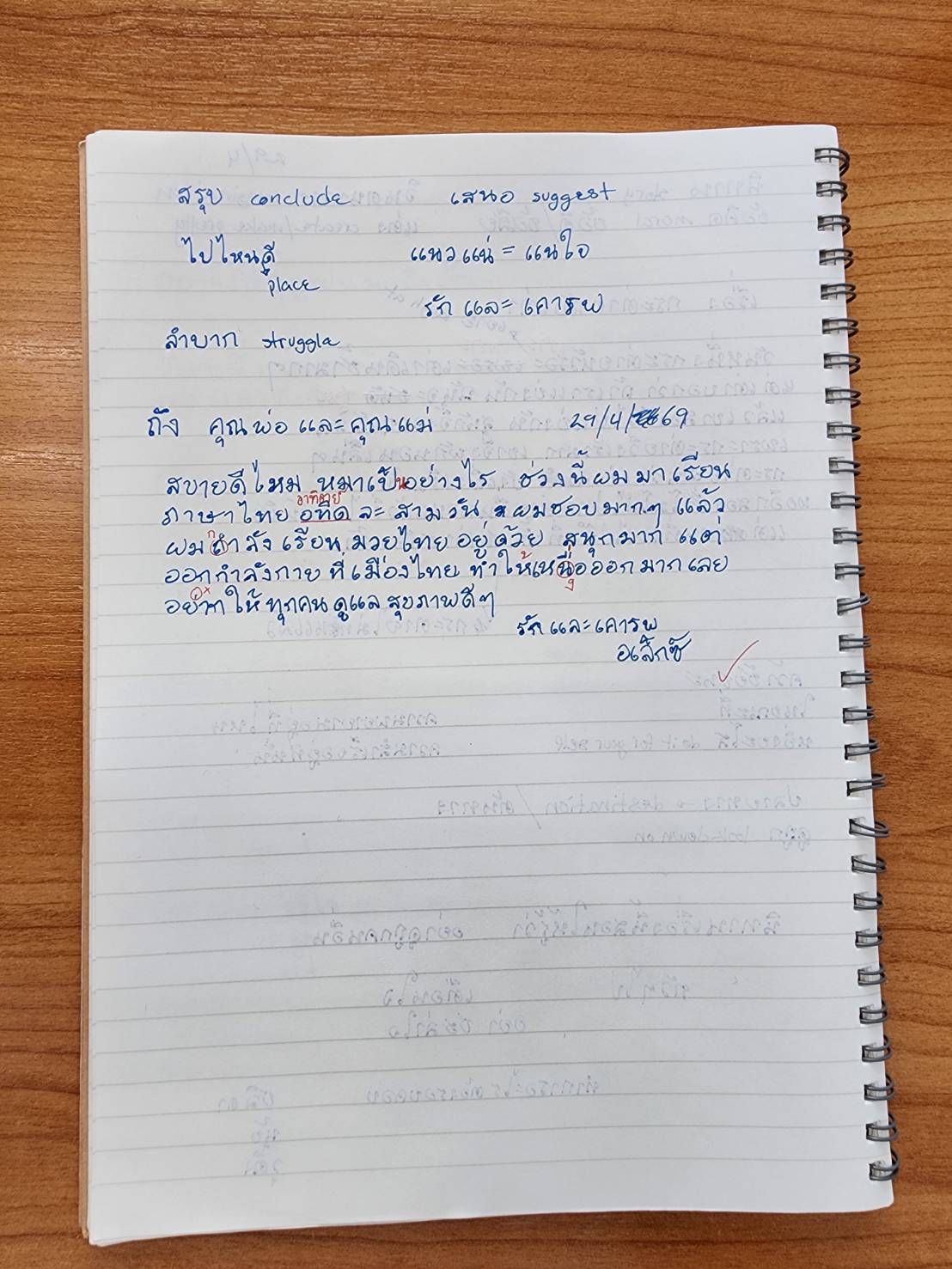
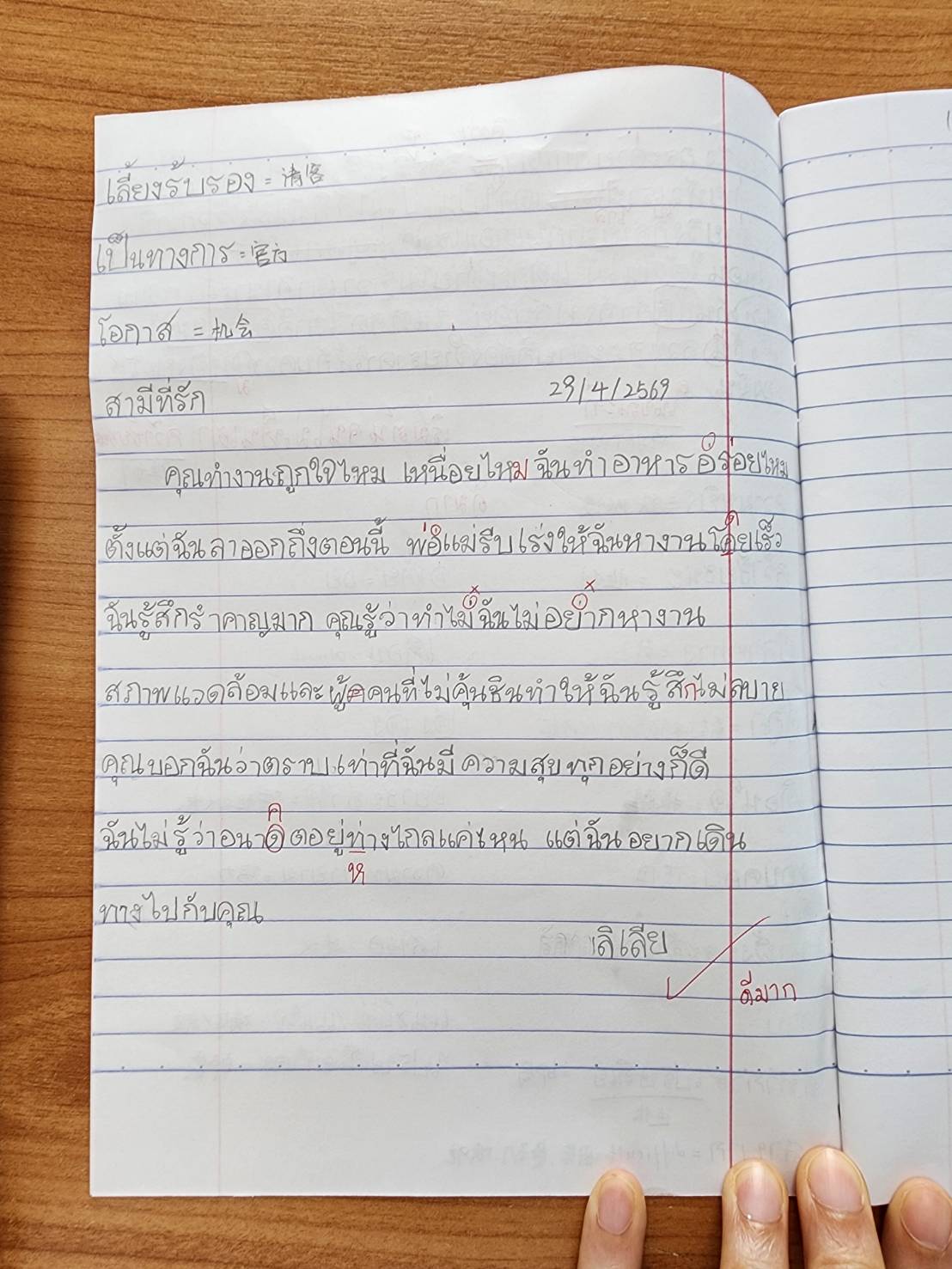
Yes — Thai is genuinely one of the harder languages for English speakers. The US Foreign Service Institute classifies Thai as a Category IV language, the most difficult category, alongside Arabic, Japanese, and Chinese. The main challenges are:
None of these make Thai impossible — millions of people speak it fluently, and thousands of foreigners learn it every year in Bangkok. But they do make the timeline longer than it would be for a European language. Expecting to ‘pick it up’ casually without structured study will lead to frustration. Structured study with consistent hours leads to real progress.
The program is available in three commitment levels: Thai Essentials, Thai Progression, and Thai Mastery — covering four, eight, and 14 months, respectively. All three include ED visa sponsorship. Thai Essentials and Thai Progression include 8 hours of classes per week, while Thai Mastery includes 6 hours per week. Classes are taught in two-hour sessions throughout the program.
The program is available in three commitment levels: Thai Essentials, Thai Progression, and Thai Mastery — covering four, eight, and 14 months, respectively. All three include ED visa sponsorship. Beginner and intermediate students study 8 hours per week across four days, while advanced students study 6 hours per week across three days, with multiple scheduling options to fit different routines.
You can hold basic conversations without reading Thai script, but progress has a ceiling if you avoid it. Reading and writing reinforce vocabulary retention significantly. At GEOS, the Thai alphabet is introduced from Module 1 alongside speaking practice — most students find that learning both simultaneously is easier than treating them separately.
Most students develop a working grasp of the five tones within the first four to eight weeks of structured study. Producing tones accurately under pressure — in real conversations with native speakers — takes longer, typically three to six months. Tones become more natural with consistent speaking practice, which is why GEOS classes use Thai from lesson one rather than delaying spoken practice.
The GEOS Thai ED visa does not permit working in Thailand. The ED visa is a student visa — its purpose is study, not employment. If you are on a work permit and want to study Thai outside of work hours, private lessons outside the ED visa program may be more suitable. Contact GEOS to discuss your situation.
Yes. Beginner and intermediate students study 8 hours per week, while advanced students study 6 hours per week. Students who attend consistently and practice outside class can make steady, measurable progress through the course. Students who miss classes regularly or do not engage with Thai outside class will generally progress more slowly. Bangkok helps enormously because the language surrounds you every day.
No. The Thai program at GEOS starts from absolute beginner — zero prior knowledge required. Module 1 begins with greetings, the Thai alphabet, and basic daily phrases. Students who already have some Thai may be assessed and placed at a higher module. Contact GEOS to discuss your current level before enrolling.
The Thai program runs for 14 months with a border run at the eight-month mark to obtain a fresh ED visa. The English program runs for 12 months with no border run required. The Thai program uses monthly class intakes; the English program accepts students any week and places them in an existing class immediately after a level check.
Four months to basic conversation. Eight months to functional reading and writing. Fourteen months to confident, upper-intermediate Thai. That is the progression the GEOS program is designed to support, with 8 hours of structured study per week during the beginner and intermediate stages and 6 hours per week during the advanced stage. It is not a guarantee of native fluency, but a structured progression through a language that rewards consistent effort.
Bangkok accelerates the process in a way no classroom elsewhere can replicate. Every market visit, taxi ride, and conversation with a neighbor becomes practice. The city does not let you forget what you learned last week. At GEOS, our Thai program is built on 20+ years of MOE recognition and structured specifically to give students the foundation they need to use Thai in real life — not just pass a test. Contact us to confirm the next intake date and start your Thai language journey.
Explore our collection of captivating articles, each offering a unique perspective
GEOS Thailand is conveniently located in the heart of Bangkok, close to Asoke BTS and Sukhumvit MRT stations.
enquiry@geosthai.com