


Thai small talk follows unwritten patterns that most Western visitors misread: questions about your age, salary, and appearance are warmth, not intrusions. Understanding these patterns early makes daily life in Bangkok significantly smoother and reduces the awkward moments that trip up most new arrivals. Questions about whether you have eaten (กินข้าวหรือยัง, gin khao reu yang) function like “how are you” and do not require a detailed answer. At GEOS, our 20+ years of MOE recognition and students from over 40 nationalities mean we see these patterns play out every week, and our cultural program is built specifically around giving students the context to practice them. Students who engage with Bangkok through cooking events, street food tours, and daily market interactions move through these adjustments faster than those who only practice in the classroom. Here is what to expect from the first conversations, and why these exchanges look different from what most students are used to.
You are three weeks into your program at GEOS, ordering lunch near Sukhumvit 23. The vendor asks where you are from, then whether you are married, then how much you paid for your condo. Back home, this would feel intrusive. Here, it is warmth. Once you understand the pattern, these exchanges stop feeling strange and start feeling like genuine connection.
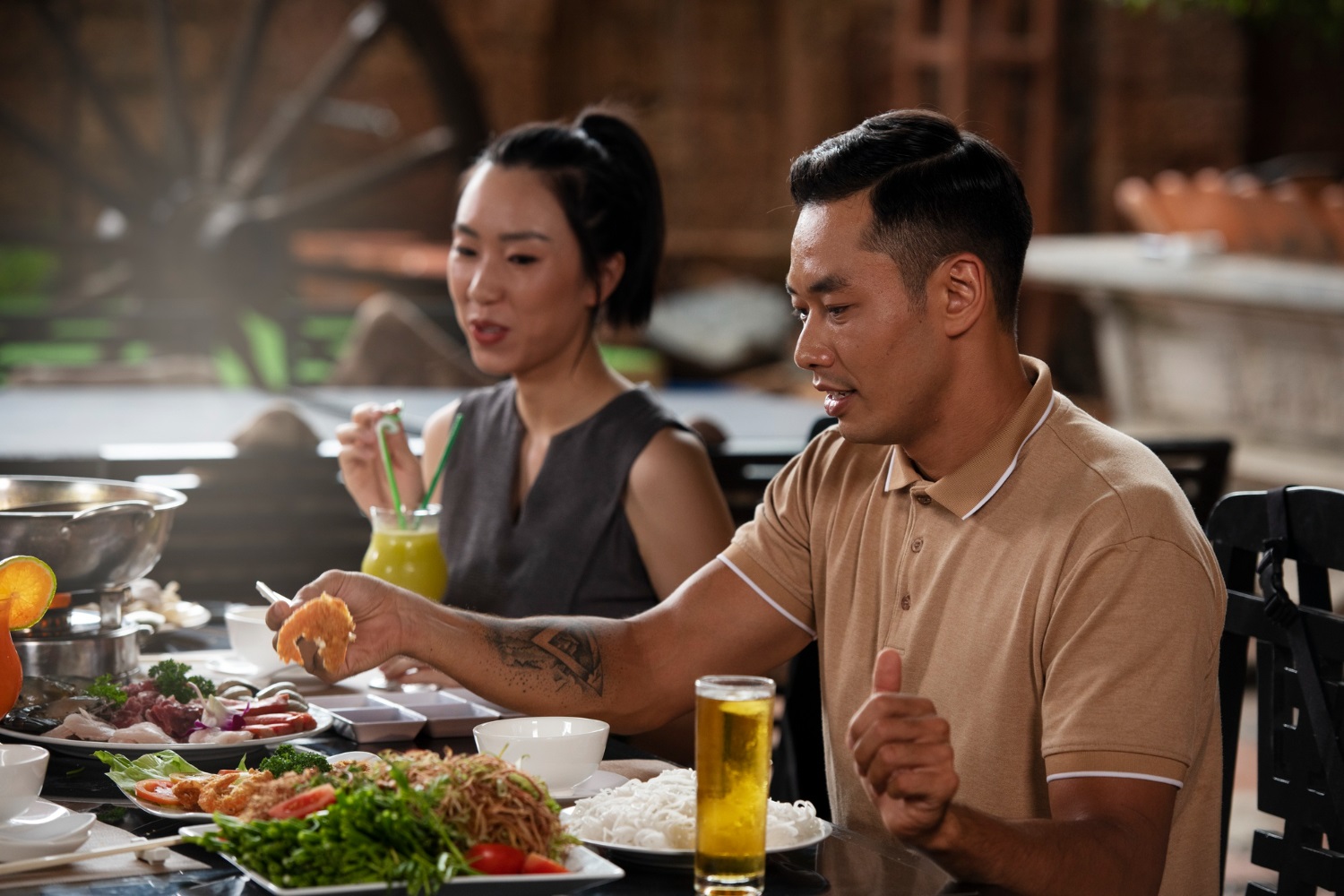
This phrase (กินข้าวหรือยัง, gin khao reu yang) functions like “how are you” in English. It is not usually a real invitation to eat. The polite response is simply “yes, I have eaten” or
“not yet,” followed by returning the question. Answering literally, by explaining your exact meal plans, tends to confuse Thai speakers more than it helps.
Food is central to Thai social culture in a way that goes beyond mealtimes. Checking in on whether someone has eaten is a way of expressing care, not curiosity about their schedule. Once students understand this, the exchange stops feeling like an odd question and starts feeling like what it is: a small, warm greeting.
Not in Thailand. Age determines how people address each other, since Thai uses different pronouns and politeness levels depending on whether someone is older or younger. Salary and price questions are common icebreakers, not intrusions. GEOS students often find this the hardest habit to unlearn, since deflecting these questions can come across as cold here.
The Royal Society of Thailand, the official authority on the Thai language, documents the formal pronoun system that makes age awareness so central to everyday Thai conversation. Understanding why people ask is easier once you see how the language is structured around it.
Comments about weight gain, weight loss, tiredness, or paleness are common and generally kind. “You got fat” or “your face looks tired today” are observations, not insults. The expected response is a light laugh or a simple acknowledgment, not defensiveness. This took some GEOS students longer to adjust to than any vocabulary list.
Thai communication generally avoids the kind of emotional directness that many Western students are used to. Appearance comments fill a conversational space that, in English, might be occupied by “you seem well” or “you look tired, are you okay?” The intent is the same. The framing just translates differently.

The wai (pressed palms greeting) and a soft, indirect tone matter more than direct eye contact or firm handshakes. Raising your voice, arguing directly, or showing visible frustration in public damages relationships quickly. Thai communication favors preserving kreng jai, a mutual consideration that avoids putting others in an uncomfortable position.
The Tourism Authority of Thailand provides a useful overview of Thai cultural etiquette for visitors. For students planning to live in Bangkok for 12 to 15 months, understanding kreng jai early makes professional and social relationships considerably easier.
For students building toward real conversational fluency in Thai, see our Thai language learning timeline for what to expect at each stage of the program.
A flat “no” can feel confrontational. Instead, you will hear “mai saduak” (not convenient), “khoi khoi” (maybe later), or a smile followed by silence. These are all soft refusals. Learning to recognize them saves significant confusion, since a direct “no” rarely comes unless the relationship is very close or very formal.
This pattern extends beyond refusals. Thais often avoid correcting someone directly in public to protect face on both sides. Students who understand this adjust their own communication style, which makes their interactions with Thai neighbors, vendors, and colleagues noticeably smoother.

Bangkok tends to move faster and more casually, especially with younger Thais who have international exposure. In smaller cities or with older speakers, small talk follows more traditional patterns and covers more ground before getting to business. Requirements and comfort levels vary by region and by individual, so treat these patterns as common tendencies rather than fixed rules.
Even within Bangkok, context matters. A conversation with a market vendor differs from one with a colleague at a professional event. GEOS students who practice across different settings, through cooking events, street food tours, and daily market interactions, develop a flexible range that carries them through most situations.
For how GEOS builds this kind of real-world practice into the student experience, see our post street food near Chula guide.
Yes, this is expected and completely normal in Thai conversation. Age determines how people address each other, since Thai uses different pronouns and politeness levels depending on whether someone is older or younger. Asking age is practical, not intrusive. Returning the question signals you understand how Thai social interaction works and puts both people at ease.
Most Thai people are genuinely forgiving of foreigners learning the culture. A warm apology and a smile resolve most awkward moments. Thai social norms place high value on maintaining a pleasant atmosphere, so the genuine effort to acknowledge a mistake matters more than the mistake itself. Goodwill is recognized and the conversation usually moves on quickly.
Yes, though it tends to be brief. A few personal questions typically come before the main topic, even in formal meetings. Skipping small talk entirely can feel abrupt and may start a professional relationship on the wrong foot. GEOS students who practice Thai in daily life often find that business conversations become noticeably easier once they are comfortable with informal Thai.
Most GEOS students report feeling comfortable with Thai small talk patterns within two to three months of regular practice. Daily interactions help significantly, whether at a coffee shop, market, or with neighbors. Students who engage with Bangkok life outside the classroom, through cooking events, street food tours, and daily conversations, consistently report faster adjustment than those who only practice in class.
Basic phrases help you get started, but real comfort comes from live practice with Thai speakers. Memorized scripts rarely survive the speed of a real conversation. At GEOS, our Direct Method Thai program emphasizes speaking from day one rather than textbook patterns. Students who combine classroom practice with daily Bangkok life, whether at markets, restaurants, or with neighbors, adjust noticeably faster.
Indirectly, yes. Confidence in everyday Thai conversations carries over into comfort at official counters, including ED visa application appointments at Chaeng Watthana Immigration. Students who are comfortable with informal Thai tend to feel less anxious in formal settings. GEOS staff accompany students to their first Immigration appointment, which helps regardless of your current Thai level.
Textbooks teach grammar. Real fluency in small talk comes from daily exposure, correction, and repetition with people who actually speak the way Thais speak. At GEOS, our Direct Method classes focus on real conversation patterns from week one, not just vocabulary lists. Our cultural program, including cooking events and street food tours, gives students the real-world context to practice exactly this kind of natural, informal talk.
Understanding Thai small talk does not take years. It takes a few weeks of regular practice, a willingness to make mistakes, and an environment where those mistakes get corrected gently in real time. That is what GEOS builds. Curious what a typical week looks like? Book a free trial class and see it in action.
Explore our collection of captivating articles, each offering a unique perspective
GEOS Thailand is conveniently located in the heart of Bangkok, close to Asoke BTS and Sukhumvit MRT stations.
enquiry@geosthai.com