
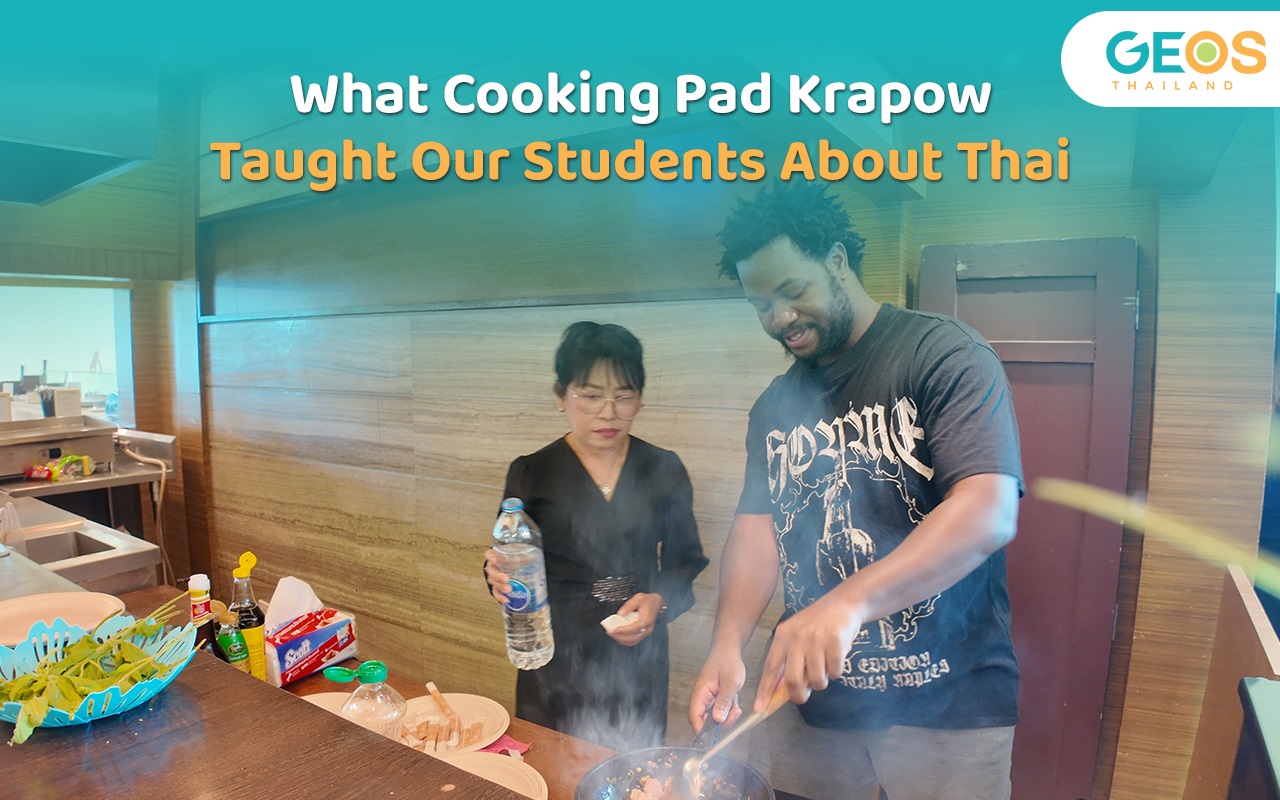
GEOS students recently learned Thai through cooking at a Pad Krapow workshop at the Jasmine Hotel in Bangkok. Working with Thai staff, they practised ingredient names, cooking verbs and taste vocabulary while preparing the dish from scratch. Instead of reading the words from a page, students used them while chopping, stir-frying, seasoning and eating together.
Pad Krapow (ผัดกะเพรา) is one of Thailand’s most recognisable dishes, and its Thai name — meaning “stir-fried holy basil” — gave students a natural entry point into food vocabulary they can use in everyday life. The workshop covered ingredients such as holy basil, chilli, garlic and fish sauce, alongside practical cooking actions and conversation.
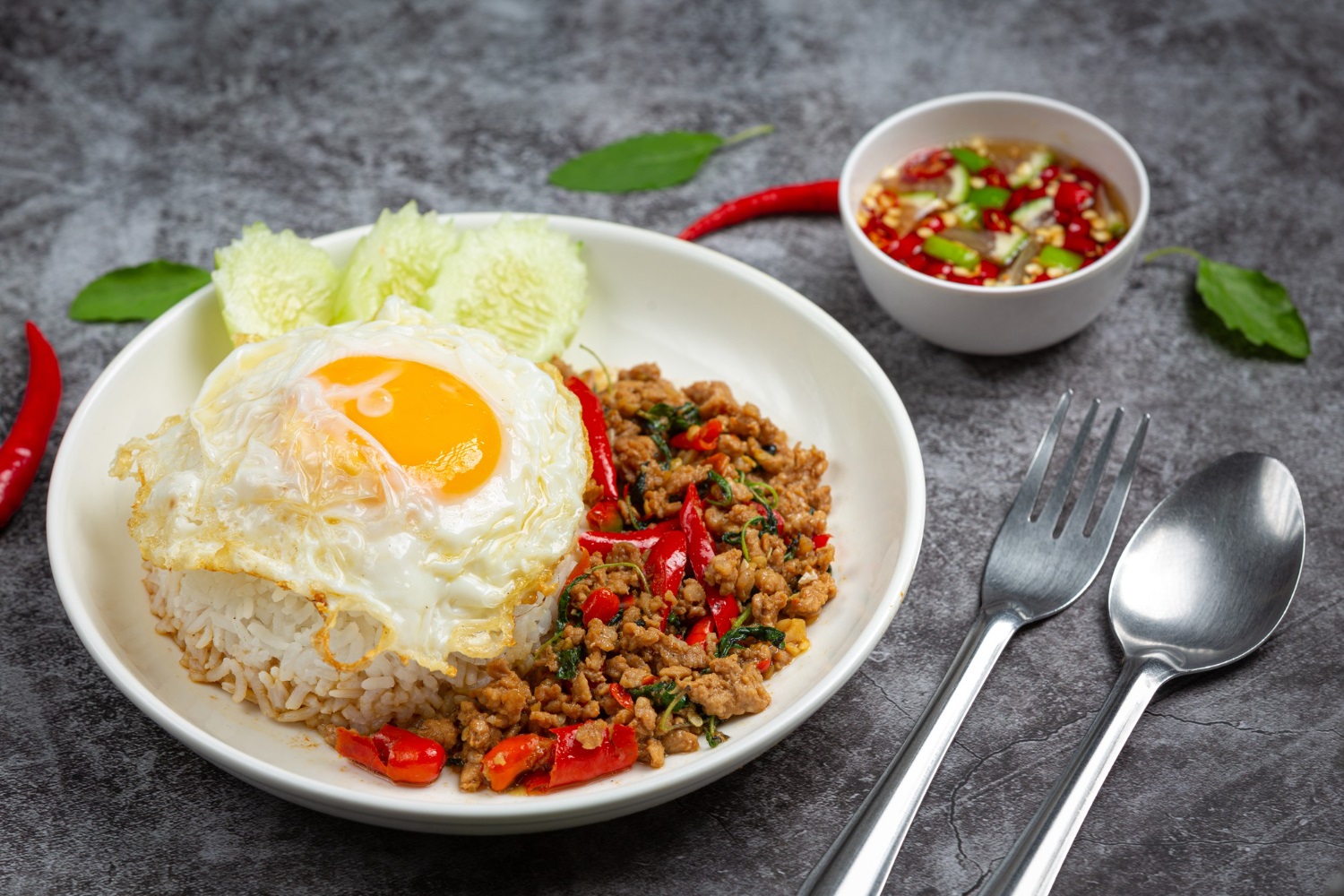
Pad Krapow is a stir-fried dish built around holy basil (กะเพรา, kraphao), typically made with minced chicken or pork, garlic, chili, and fish sauce, and usually served over rice with a fried egg on top. It is one of the most ordered dishes in Thailand, found at nearly every street stall and restaurant in Bangkok.
GEOS chose Pad Krapow for this workshop because it is a dish students will order constantly during their time in Bangkok. Learning to cook it means learning the exact vocabulary needed to order it, describe it, and understand a menu without guessing. Unlike a dessert workshop, which introduces less frequently used words, Pad Krapow vocabulary is immediately and repeatedly useful.
For context on how food vocabulary fits into GEOS’s broader approach to learning Thai, see our post on learning Thai beyond the classroom
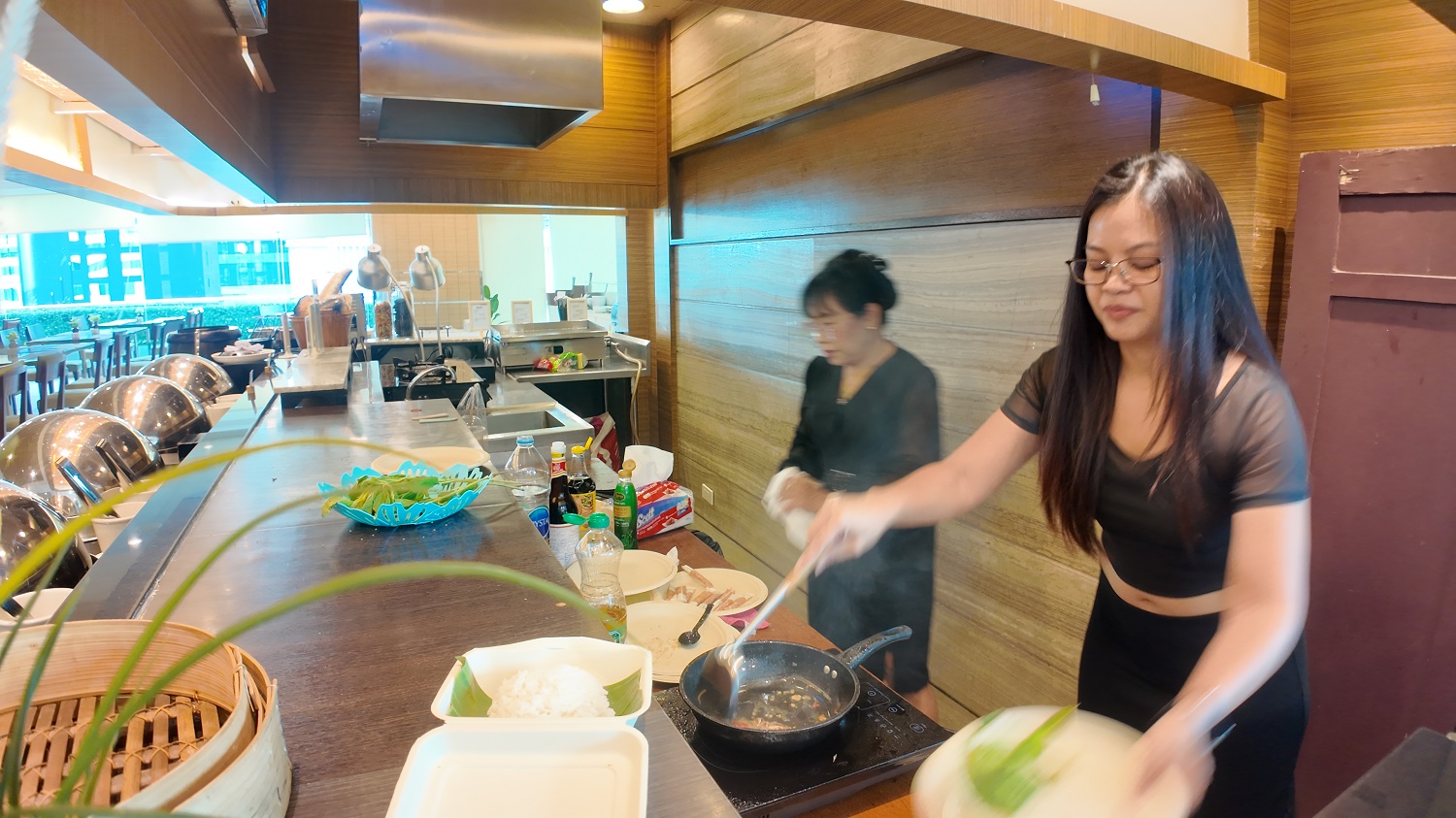
This workshop moved off campus to the restaurant inside the Jasmine Hotel, giving students a different kind of practice than a classroom or even the school kitchen. GEOS staff prepared all the ingredients in advance and explained the dish before handing over to students to cook with guidance.
The change of location matters for language learning. A restaurant kitchen is a real Thai food environment: the layout, the equipment, and the pace all differ from a controlled classroom setting. Students who can navigate ordering ingredients, asking questions, and following instructions in a genuine restaurant space build confidence that transfers directly to eating out anywhere in Bangkok.
At the end of the session, students sat down together and ate the dish they had made. Sharing the meal with classmates from GEOS’s wide mix of nationalities was, based on recent GEOS student experiences, the part of the day people talked about most.
The workshop covered three vocabulary areas, taught in context as students prepared and cooked the dish:
Because students were handling the ingredients themselves rather than watching a demonstration, the vocabulary was reinforced through touch, smell, and taste at the same time as hearing and speaking it. That combination is difficult to replicate in a standard classroom lesson.
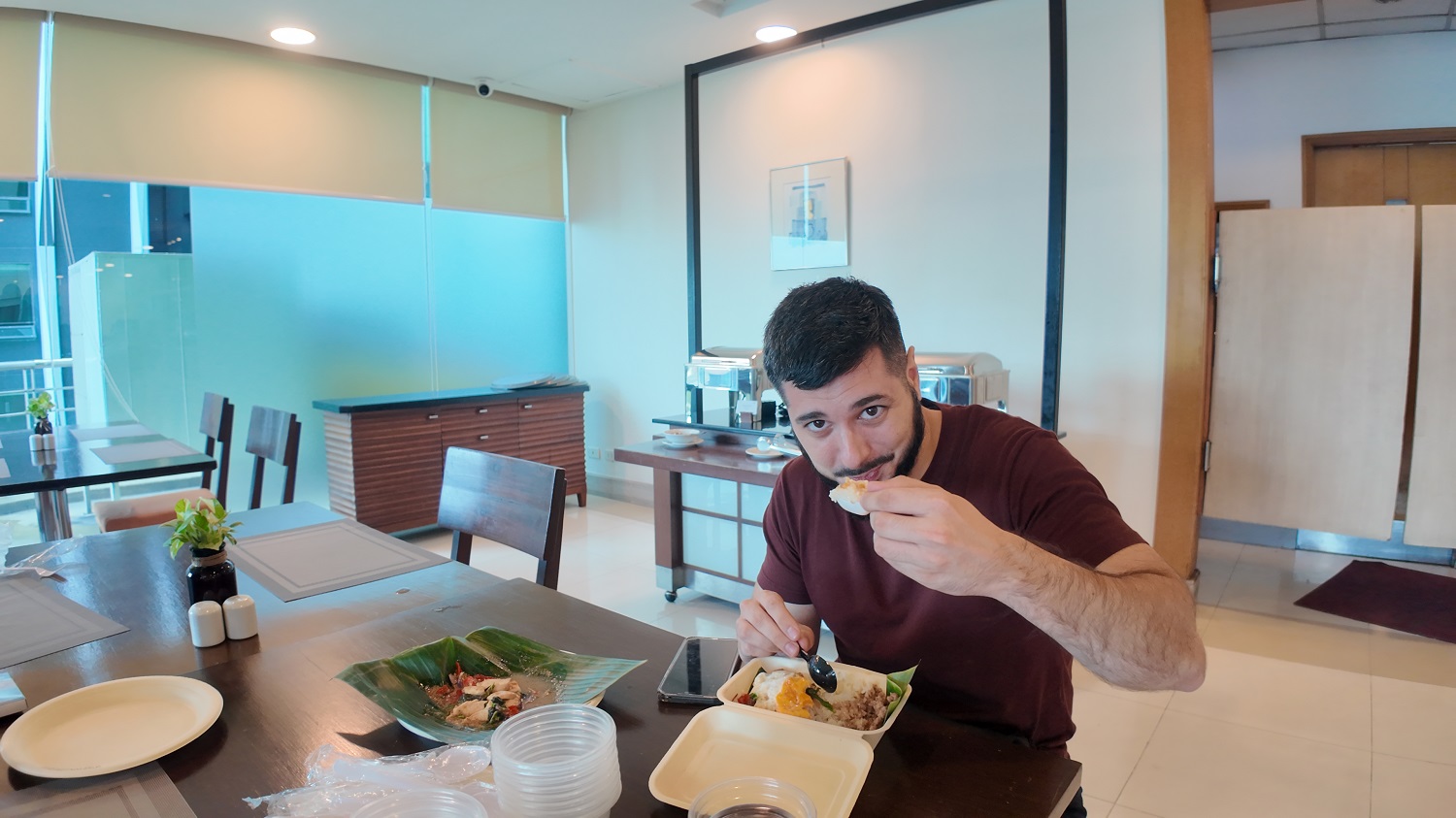
Language retention improves significantly when a word is attached to a physical action or sensory experience. Chopping garlic while saying กระเทียม out loud links the word to a memory that is far stronger than seeing it written on a flashcard. This is the same principle behind GEOS’s earlier dessert workshop, where students made Bua Loy from scratch and learned ingredient and texture vocabulary in a similarly hands-on format.
Pad Krapow specifically reinforces vocabulary students will use almost daily. Ordering food, describing spice levels, and asking about ingredients are constant needs for anyone living in Bangkok. A student who has physically cooked the dish and used the vocabulary in a real kitchen setting orders with more confidence than one who has only memorized the words.
For the full picture of GEOS’s Thai program structure and how cultural events fit into it, see our Thai language learning timeline
The Pad Krapow workshop is one of approximately four cultural events GEOS runs each year, alongside a Thai dessert workshop, a Loi Krathong festival workshop, and an annual outdoor community event. Each event is built around the same principle: give students a real reason and a real context to use the Thai they are learning in class.
None of these events are extras layered on top of the language program. They are part of how GEOS teaches. The classroom builds the structure, and events like this one give students somewhere to actually use it.
For a full breakdown of the annual cultural program and what happened at our Bua Loy dessert workshop, see our post: What Making Bua Loy Taught Our Students About Thai.
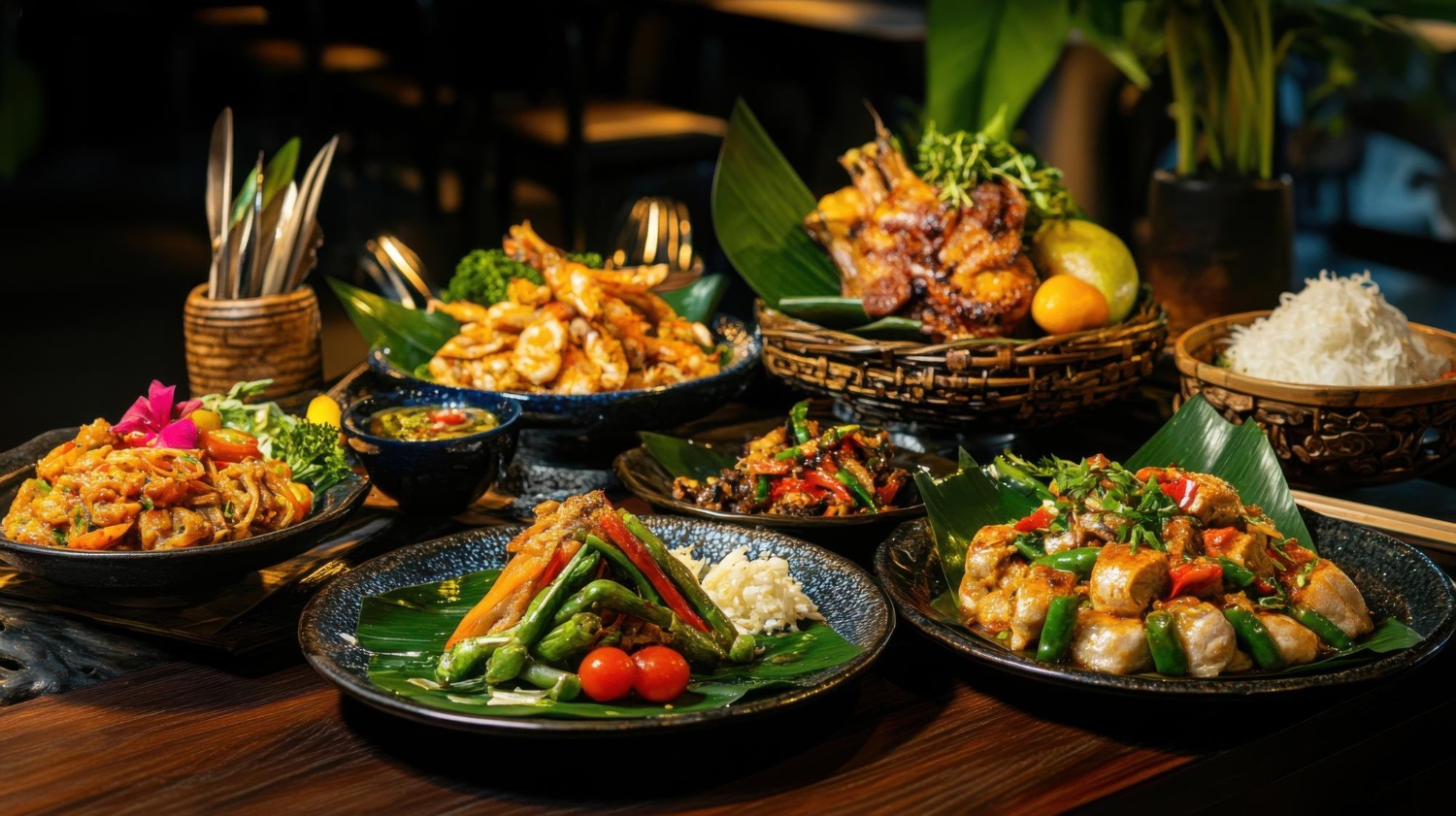
After the Pad Krapow workshop, students frequently ask GEOS staff what other Thai dishes they would like to learn to cook. The most requested dishes give a sense of what students are drawn to once they realize how much vocabulary a single dish can teach:
GEOS reviews requests like these when planning the annual cultural calendar. The response to the Pad Krapow workshop will directly inform what comes next.
Cooking Pad Krapow was just one of the many ways our students get to experience Thailand beyond the classroom.
At GEOS, learning a language is also about experiencing the culture, meeting people from different countries, and creating memories together. Throughout the year, our students take part in different workshops and cultural activities — from Thai food and traditional experiences to fun activities with classmates and teachers.
Take a look at some of our previous workshops and see what life at GEOS is really like:
No cooking experience is required for any GEOS food event. Thai staff prepare the ingredients in advance and guide students through every step. The focus is on language practice, not culinary skill. Students of every level, including complete beginners in Thai, have taken part and found the hands-on format easier to follow than a classroom lesson covering the same vocabulary.
Hosting the workshop at the Jasmine Hotel restaurant gave students a real food environment rather than a classroom setting. Practicing Thai in an actual kitchen, with real equipment and a working restaurant pace, builds confidence that transfers directly to ordering and eating out in Bangkok. GEOS occasionally moves cultural events off campus specifically for this reason.
Pad Krapow can be made mild or spicy depending on the amount of chili used. At the GEOS workshop, students learned the Thai phrases for adjusting spice level themselves, including asking for more or less chili. This is genuinely useful vocabulary, since spice level is one of the most common things visitors need to communicate when ordering Thai food.
GEOS runs one dedicated Thai cooking workshop and one dessert workshop each year, as part of a broader annual cultural calendar that also includes a Loi Krathong festival workshop, and a community outdoor event. Each event is designed around a different vocabulary theme, so students build a broad, practical food vocabulary over the course of their program.
Cultural events, including cooking and dessert workshops, are included as part of GEOS enrollment at no extra cost. Students do not need to sign up separately or pay an additional fee. Events are announced to enrolled students at the start of each month, and attendance is open to all students regardless of program or current level.
Indirectly but meaningfully. The ED visa requires genuine study and demonstrable language progress. Students who practice Thai outside the classroom through events like this one tend to progress faster and build more natural conversational confidence. That progress reflects in classroom assessments and in how comfortable students feel using Thai in daily situations, including at Immigration appointments.
An afternoon cooking Pad Krapow at the Jasmine Hotel taught students vocabulary they will use every single day in Bangkok: how to describe spice level, how to ask for ingredients, and how to talk about a dish they made with their own hands. That kind of learning does not come from a vocabulary list. It comes from doing.
At GEOS, events like this exist because language learning that stays inside the classroom stops working the moment class ends. Bangkok is full of food, markets, and conversations waiting to happen, and we build the program around giving students the tools and the confidence to use them. Contact GEOS to find out more about our Thai language program and what a year of studying in Bangkok actually looks like.
Explore our collection of captivating articles, each offering a unique perspective
GEOS Thailand is conveniently located in the heart of Bangkok, close to Asoke BTS and Sukhumvit MRT stations.
enquiry@geosthai.com