
Thai culture is built on kreng jai, a form of mutual respect that avoids making others uncomfortable, even at the cost of full directness. This single idea shapes how Thais greet each other, talk about food and age, and handle disagreement in daily life. Understanding it, along with the wai greeting and how Thais avoid saying no directly, makes daily life much easier for anyone living in Bangkok. At GEOS, our cultural events build this understanding directly into the student experience, not as an extra activity but as part of how the language is taught. Our 20+ years of MOE recognition means we have watched thousands of students move from confusion to comfort with Thai culture, often faster than they expected. Here is what Thai culture actually looks like day-to-day, and how GEOS students experience it.
Most visitors arrive with a general sense that Thailand is friendly and relaxed. That is true. But the specific reasons behind it often surprise people. Thai culture places heavy value on kreng jai. This is a kind of mutual consideration. It means avoiding actions that make others uncomfortable, even if it means being less direct.
This shows up in small, everyday ways. A flat no can feel confrontational. So Thais often use softer phrases instead. Personal questions about age, salary, or weight might feel rude elsewhere. In Thailand, they are common and usually come from genuine warmth, not nosiness.
For a full breakdown of how this plays out in daily conversation, see our post: The Unwritten Rules of Thai Small Talk (And Why They Matter)
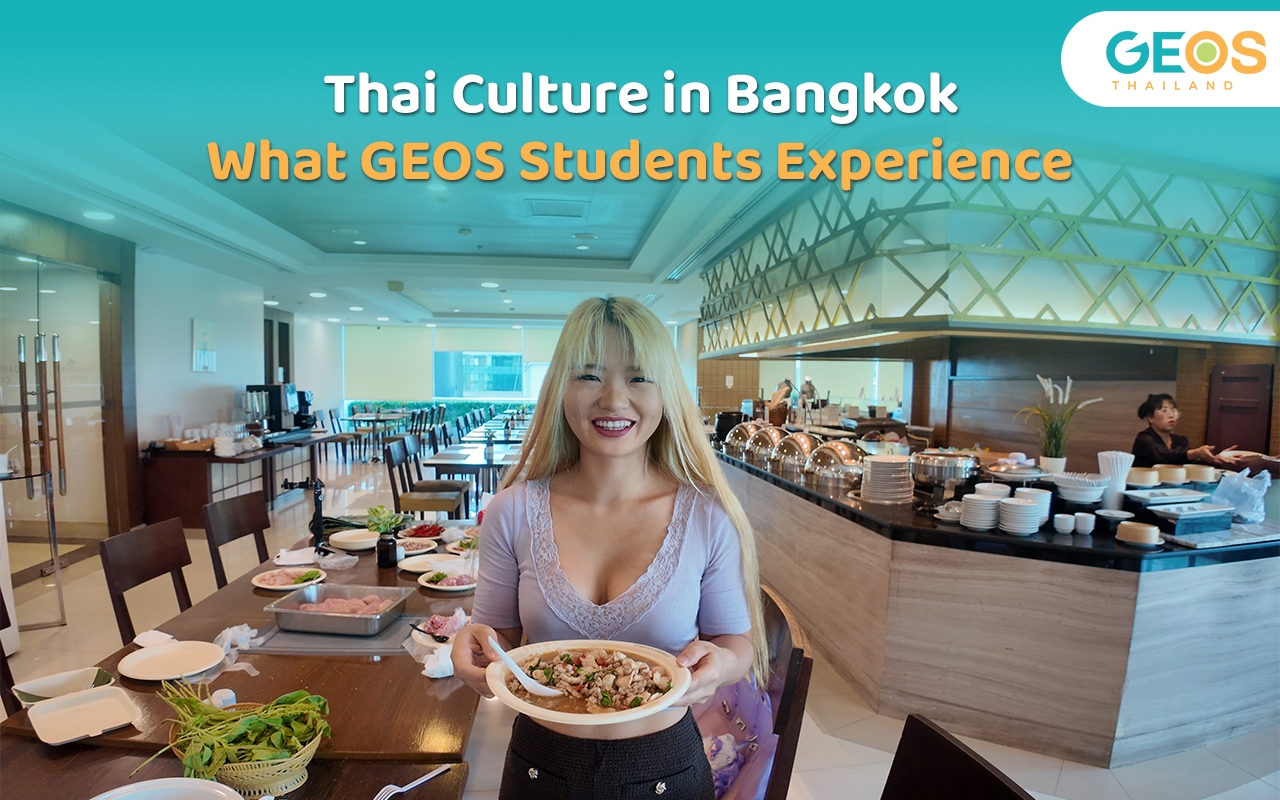
Food sits at the center of Thai culture. It is how people connect, how they show care, and how conversations often start. GEOS builds this directly into student life through hands-on cooking events, not just lessons about food.
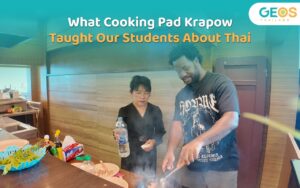
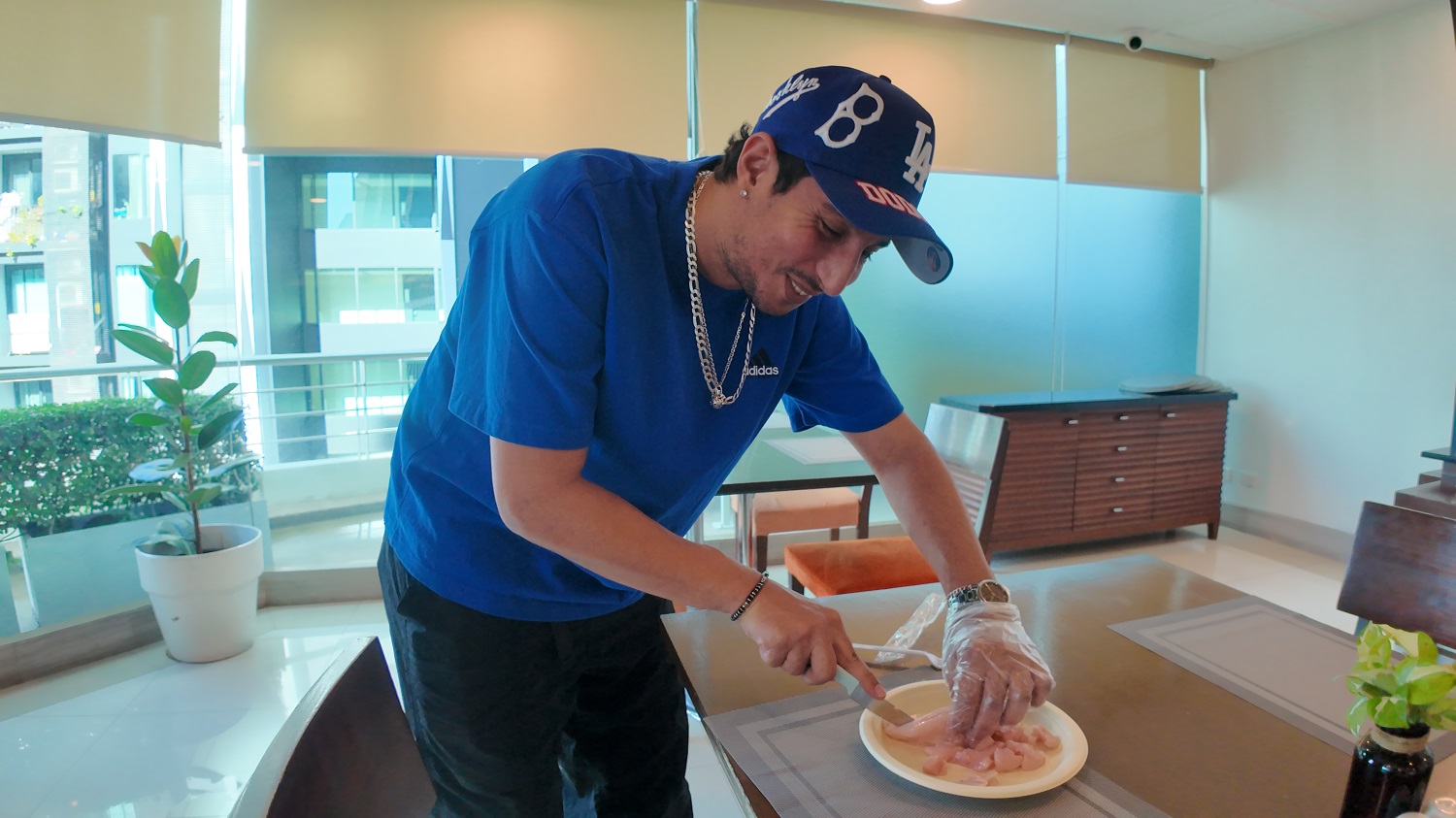
Students have cooked Pad Krapow from scratch with Thai staff at the Jasmine Hotel. They learned ingredient names, cooking actions, and taste vocabulary while preparing the dish themselves. A separate dessert workshop had students making Bua Loy, a warm coconut dessert. They learned colors, textures, and flavor words along the way.
For the full vocabulary breakdown from each event, see our posts: What Cooking Pad Krapow Taught Our Students About Thai and What Making Bua Loy Taught Our Students About Thai
This is not just about food. Cooking together, then eating together, is one of the fastest ways students form friendships across the 40 or more nationalities at GEOS.
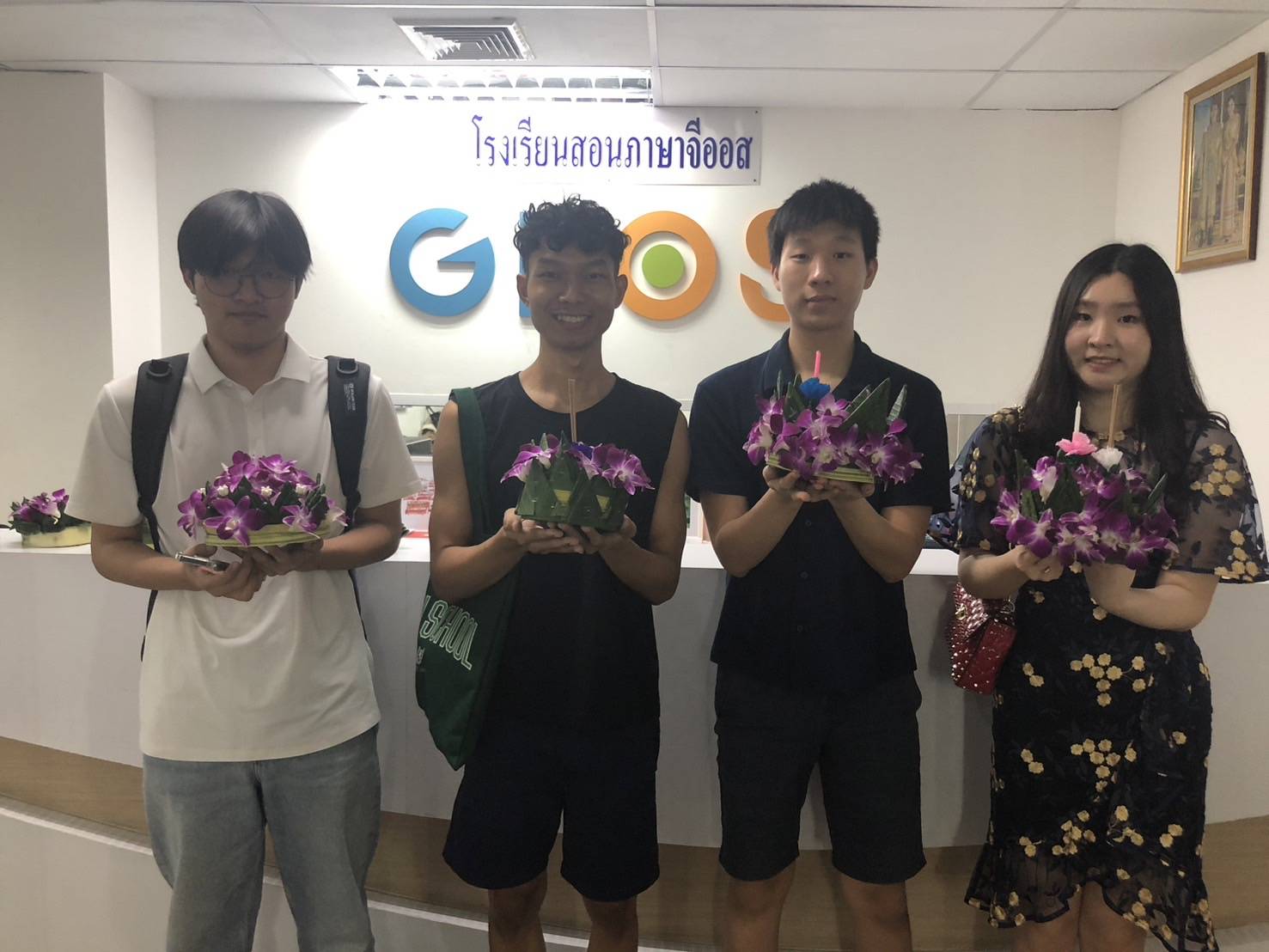
Thailand’s festival calendar is one of the richest parts of its culture. Loy Krathong, held each November, is one of the most visually striking, with small floating decorations released onto water as a symbolic gesture of letting go of misfortune.
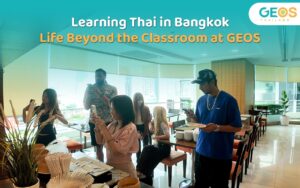
GEOS runs a dedicated Loy Krathong workshop each year, where students make traditional krathong floats by hand and learn the vocabulary and meaning behind the festival, rather than just watching it happen around them. This is one of four cultural events GEOS runs annually, alongside a cooking workshop, a drinks workshop, and a community outside event.
For the full picture of GEOS’s cultural calendar, see our post: Learning Thai in Bangkok: Life Beyond the Classroom at GEOS.
The Tourism Authority of Thailand provides useful background on Thai festivals and cultural sites for anyone planning their time in Bangkok.
Thai culture is not something students learn once and set aside. It shows up constantly. It shapes how people greet each other, how they show respect, and how they handle disagreement.
The wai, a slight bow with pressed palms, remains the standard greeting across most of Thailand. Tone and volume matter more than direct eye contact. Raising your voice or arguing openly in public can damage a relationship quickly. It works against kreng jai and causes both people to lose face.
Students who understand these patterns early adjust faster, both socially and in their language learning. Culture and language are not two separate subjects at GEOS. They are taught together, since neither makes full sense without the other.
A few points of etiquette matter more than most guidebooks suggest. This is especially true for anyone planning to live in Bangkok for a year or more, not just visit.
None of this is complicated once explained. But it rarely gets covered clearly before someone arrives. GEOS covers all of it directly with new students, both through class content and through staff support during the first weeks of enrollment.
Culture and language are taught side by side at GEOS, not as separate tracks. The Direct Method used in both the Thai and English programs is built around real, spoken communication. This naturally pulls in cultural context as part of every lesson.
These cultural events then extend learning outside the classroom. Cooking workshops, festival events, and community gatherings give students a reason to use their new language in a real setting, with real cultural weight behind it. This is included as part of enrollment at no extra cost, for both ED visa students and private learners.
For details on how this fits into the ED visa program specifically, see our post: Is a Thai ED Visa Worth It? An Honest Answer
Kreng jai is a Thai cultural concept centered on mutual consideration, avoiding actions that might make someone else uncomfortable, even at the cost of full directness. It shapes how Thais communicate, handle disagreement, and give or receive help. Understanding kreng jai helps foreigners read social situations more accurately and avoid unintentionally causing offense.
No, this is culturally normal in Thailand rather than intrusive. Age affects how Thai people address each other, since the language has different pronouns and politeness levels for older and younger speakers. Salary and price questions are common icebreakers. Visitors from cultures where these topics are private often find this the hardest habit to adjust to.
Modest clothing is expected at Thai temples. Shoulders and knees should be covered, and shoes must be removed before entering most temple buildings. Loose, respectful clothing works best. Many temples provide sarongs or wraps for visitors who arrive underdressed, but it is easier to plan ahead and dress appropriately from the start.
GEOS combines classroom instruction with cultural events held throughout the year, including an annual cooking workshop, a drinks workshop, a Loy Krathong festival workshop, and a community outside event. All four are included in enrollment at no extra cost. Culture is treated as part of the language, not a separate subject, since real communication always carries cultural context with it.
A flat no can feel confrontational in Thai culture. Instead, Thais often use softer phrases like mai saduak, meaning not convenient, or simply smile and stay quiet. These are understood as polite refusals. Recognizing these signals helps avoid confusion, since a direct no is uncommon outside very close or very formal relationships.
Yes, to some extent, through observation and guided experiences like cooking workshops or festival events. However, language and culture are closely connected in Thailand, and understanding common phrases and pronoun choices gives much deeper insight into cultural values like kreng jai and respect for age. Studying the language tends to make cultural understanding click faster.
Learning Thai without learning the culture behind it only gets a student halfway there. Words carry meaning that changes depending on who is speaking, their age relative to the listener, and the social situation. None of that comes across in a textbook alone.
At GEOS, culture is built into how Thai and English are taught from day one. This happens in the classroom and through the cultural events held throughout the year. Students leave not just able to speak, but able to understand why people say what they say. Contact GEOS to find out more about our language programs and the cultural experience that comes with them.
Explore our collection of captivating articles, each offering a unique perspective
GEOS Thailand is conveniently located in the heart of Bangkok, close to Asoke BTS and Sukhumvit MRT stations.
enquiry@geosthai.com